
When it comes to urban legends and creepypastas, I’ve always preferred filling in the blanks myself rather than watching a movie that explains every mystery step by step. That’s exactly why I approached Backrooms with a bit of caution. After all, we’re talking about an internet phenomenon that has remained so effective because of its atmosphere, unanswered questions, and the unsettling feeling that something impossible might be waiting just around the corner.
Thankfully, the filmmakers understand what makes the concept work. Instead of dissecting the myth and explaining everything, they allow it to remain mysterious. As a result, Backrooms doesn’t feel like an attempt to define the legend—it feels more like an invitation to step inside it.
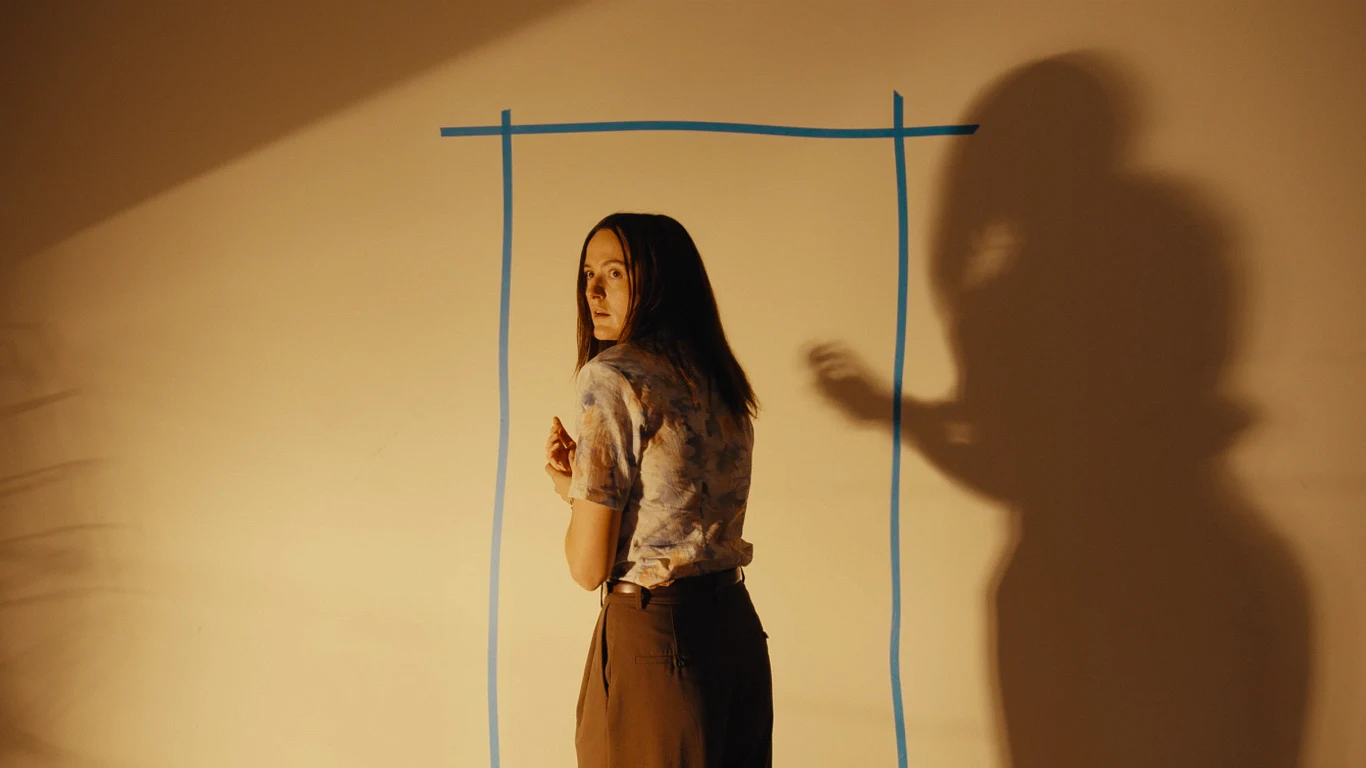
The story follows Clark, an architect whose life has fallen apart. Stuck working at a furniture store after the collapse of his marriage, he discovers a hidden passage leading to a bizarre world made up of seemingly endless yellow hallways. Before long, therapist Mary becomes involved, and the line between reality and the characters’ fractured minds begins to blur more and more with every visit.
The film’s greatest strength is undoubtedly its atmosphere. Instead of relying on constant jump scares or monsters lurking around every corner, it focuses on something much harder to achieve: a persistent sense of unease and disorientation. Endless, nearly identical corridors, the constant hum of fluorescent lights, and spaces resembling abandoned shopping mall backrooms create an environment that feels strangely familiar while remaining deeply unnatural.
The longer I spent wandering those yellow hallways alongside the characters, the more I caught myself expecting something terrifying to appear—even when absolutely nothing was happening. That’s where the movie is at its best. It makes an ordinary corridor feel far more threatening than it has any right to be.
A big part of that comes from the performances. Chiwetel Ejiofor is excellent as Clark, portraying a man who has completely lost his footing in life before discovering a place where he believes he can finally regain some control. With every trip into the Backrooms, his curiosity slowly transforms into obsession.
Renate Reinsve provides the perfect counterbalance as Mary. She initially approaches everything with professional skepticism and emotional distance, but eventually finds herself drawn into a reality she can no longer explain through logic alone. Thanks to both performances, the film never becomes just another story about exploring a creepy maze. At its core, it’s about people struggling with fear, frustration, and the search for meaning in a world that increasingly refuses to make sense.
That said, not everything works equally well. At one point, the story begins to lose momentum, almost as if it becomes trapped inside its own labyrinth. Not every return to the Backrooms introduces fresh ideas, and the pacing suffers because of it.
I also had mixed feelings about the found-footage sequences. Sometimes they genuinely enhance the chaos and confusion, but on several occasions the shaky camera goes too far. Instead of feeling more immersed, I felt closer to motion sickness—or like I’d spent too much time wearing a VR headset. It’s hardly a deal-breaker, but viewers who are sensitive to excessive camera movement may struggle with those scenes.
What I really appreciated, though, is that the filmmakers resisted the temptation to explain every mystery. The Backrooms remain an unsettling place that refuses to fit into a simple definition. You can interpret them as an alternate dimension, but they work just as well as a reflection of the characters themselves—people who have become trapped in their own lives, unable to move forward.
The film leaves plenty of room for personal interpretation, which meant I kept thinking about it long after the credits rolled. Not because I was trying to figure out what I had just seen, but because I was wondering what the story was really trying to say.
Backrooms isn’t a horror film that’s destined to become an all-time genre classic. It occasionally loses focus and revisits the same ideas a little too often, but it also understands the appeal of one of the internet’s most fascinating modern legends remarkably well. Rather than trying to scare you every few minutes, it unsettles you through atmosphere, ambiguity, and an ever-present feeling of being lost.
I walked away from the screening with my head full of strange images and the feeling that the filmmakers had successfully captured what has fascinated Backrooms fans for years. That was far from guaranteed.
I probably wouldn’t have watched the film on my own—I saw it at a press screening, thanks to the distributor—but I would have missed something I’ve been craving for a long time: a small-scale, intimate story that pulls you in through silence, mystery, and questions that never receive clear answers.
It probably won’t give you a heart attack, but Backrooms is absolutely worth giving a chance. And who knows? Maybe if enough people watch it, we’ll see more films inspired by great creepypastas in the future. I’d be more than happy to see that happen.