

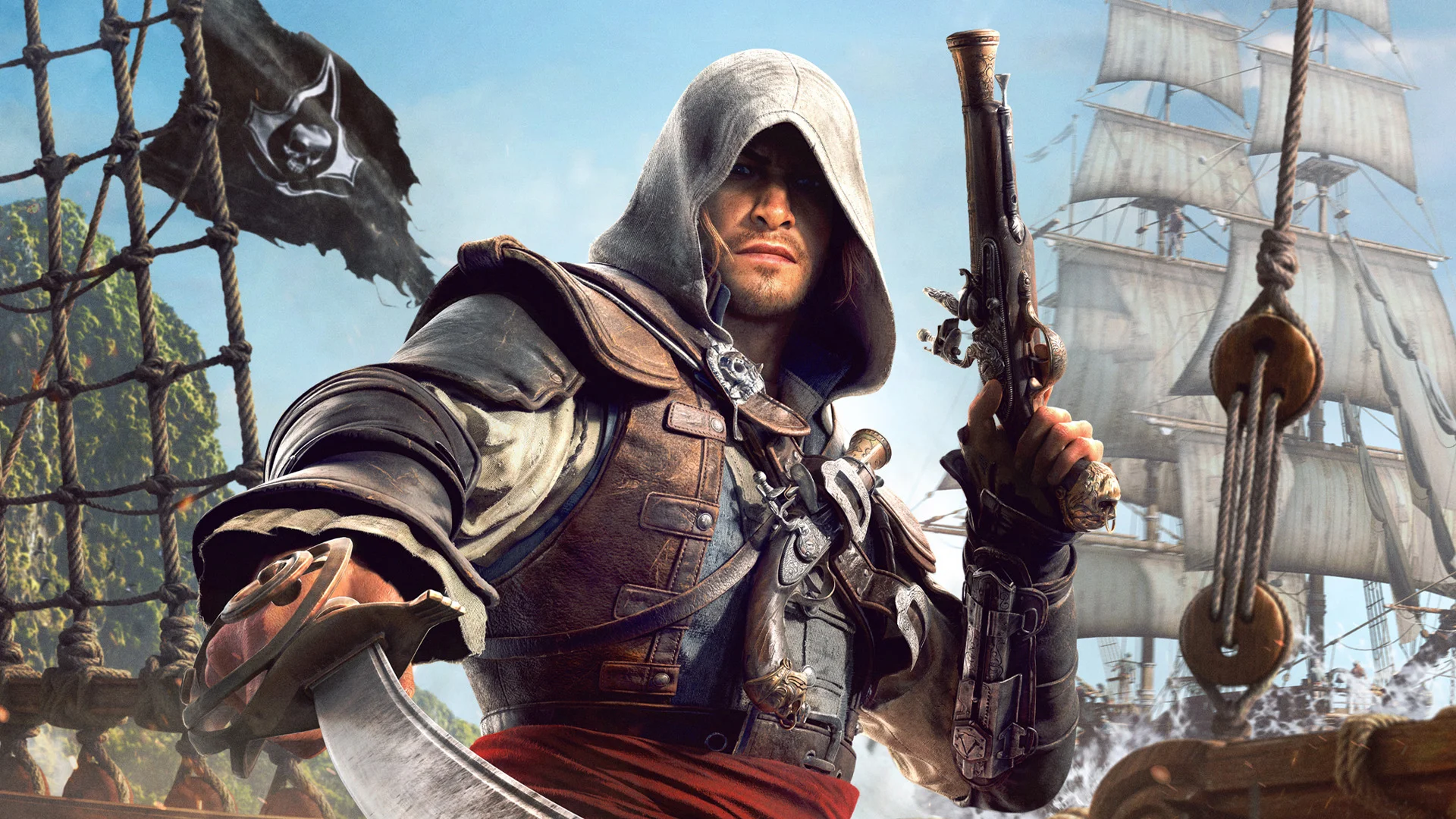
I should probably start by explaining how I approach projects like this. Whenever a game that’s long been considered a classic gets a remake, I always have mixed feelings. On one hand, I’m hoping for meaningful improvements and a modern presentation. On the other, I worry that someone might try to „fix” things that worked perfectly well from the very beginning.
Assassin’s Creed Black Flag Resynced was marketed as much more than a simple graphical facelift. Built on the latest version of Ubisoft’s Anvil engine, the game was designed with modern hardware in mind, bringing HDR, 60 FPS, ray tracing, Dolby Atmos, DualSense haptic feedback, and all the technical bells and whistles you’d expect from a big-budget PlayStation 5 release. On paper, it looked like a beloved pirate classic enhanced with a healthy dose of modern technology. Thankfully, those promises aren’t just marketing buzzwords—the improvements are immediately noticeable once you start playing.
Without venturing into spoiler territory, we once again step into the boots of Edward Kenway and find ourselves in the Golden Age of Piracy, deep in the heart of the Caribbean. As before, this isn’t a realistic history lesson but a deliberately romanticized adventure filled with lively ports, plantations guarded by hostile soldiers, and a vast open sea that often steals the spotlight. Even when nothing particularly exciting is happening, the world has a remarkable ability to hold your attention.
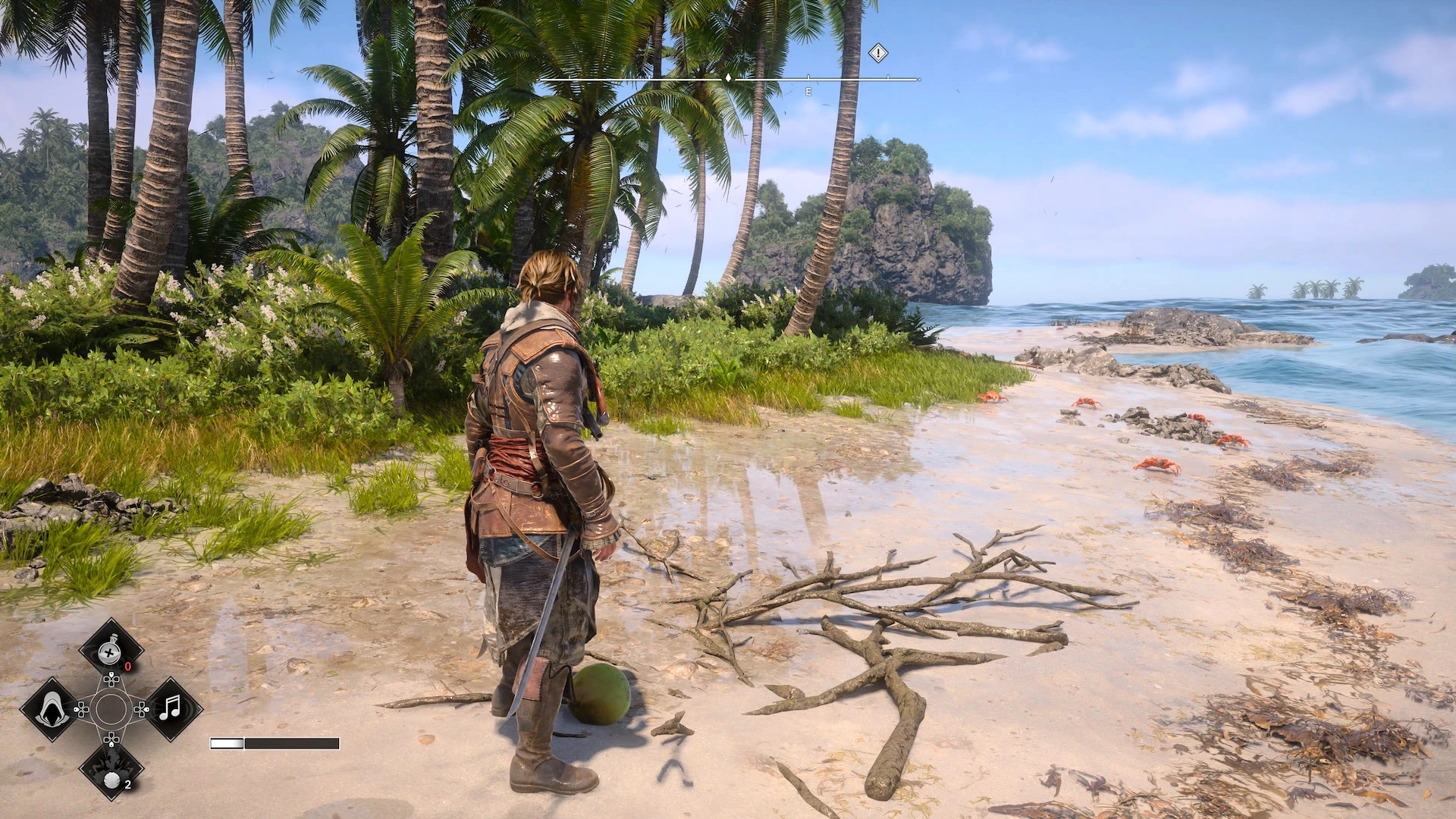
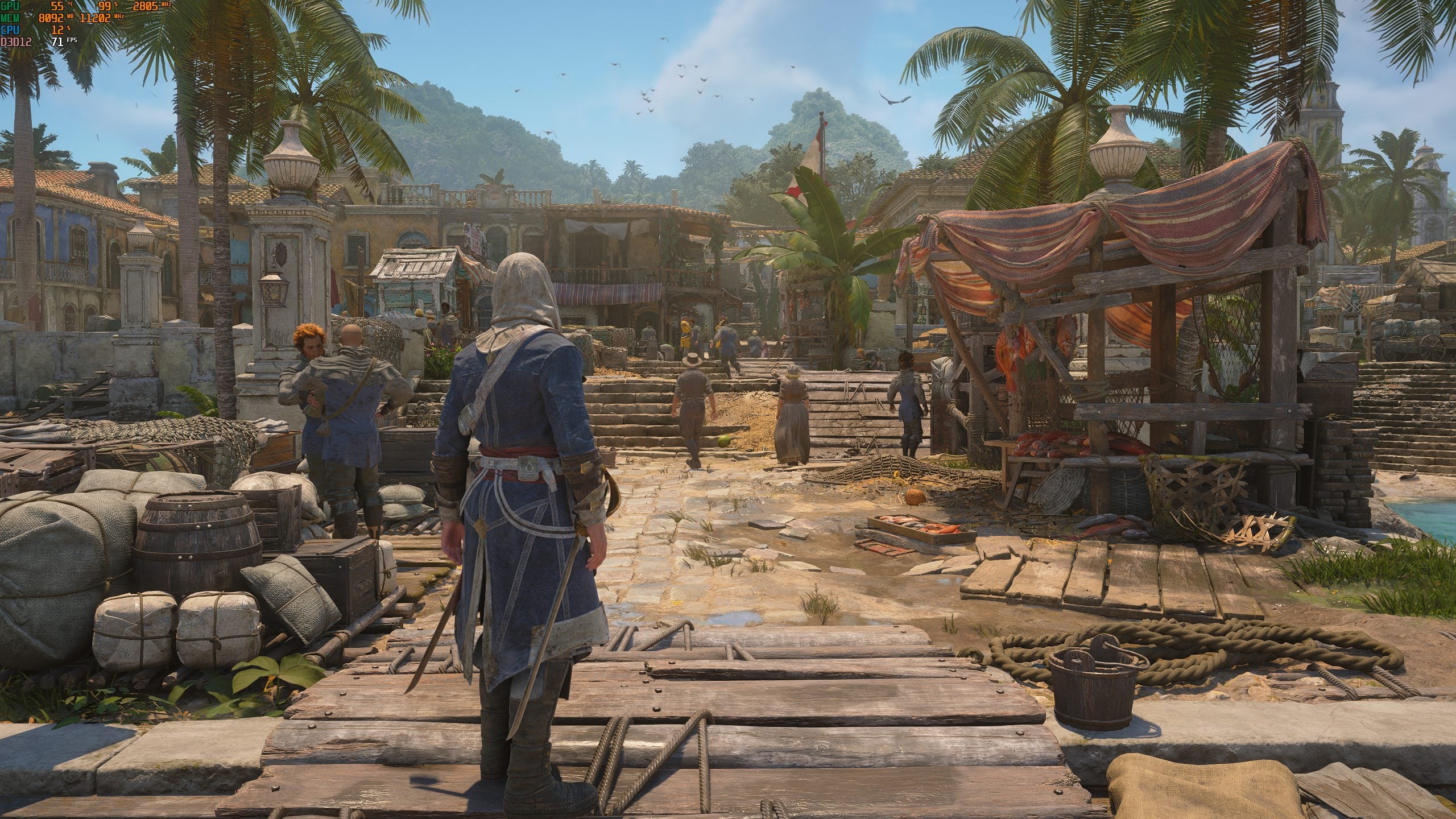
This time around, the developers clearly set out to make the world feel more dynamic and believable. The weather, time of day, and environmental details have a greater impact on what you see than ever before. The most noticeable improvement comes from the new ray-traced lighting system. Light reflects naturally off different surfaces, interiors no longer resemble dark, lifeless boxes, and the transition between sun-drenched beaches and narrow, shaded streets looks fantastic. The result is a world where simply wandering through a bustling harbor can sometimes be more memorable than a major story mission.
A lot has changed behind the scenes as well. Instead of the obvious level-of-detail pop-in that often became noticeable as you approached objects, the updated engine streams the world far more smoothly. Thanks to the PlayStation 5’s ultra-fast SSD, you can sail from the distant silhouette of an island all the way to its rocky shoreline without distracting texture pop-in or suddenly appearing models. It may seem like a small detail, but it’s exactly these kinds of improvements that make this feel like a true remake rather than a simple remaster.
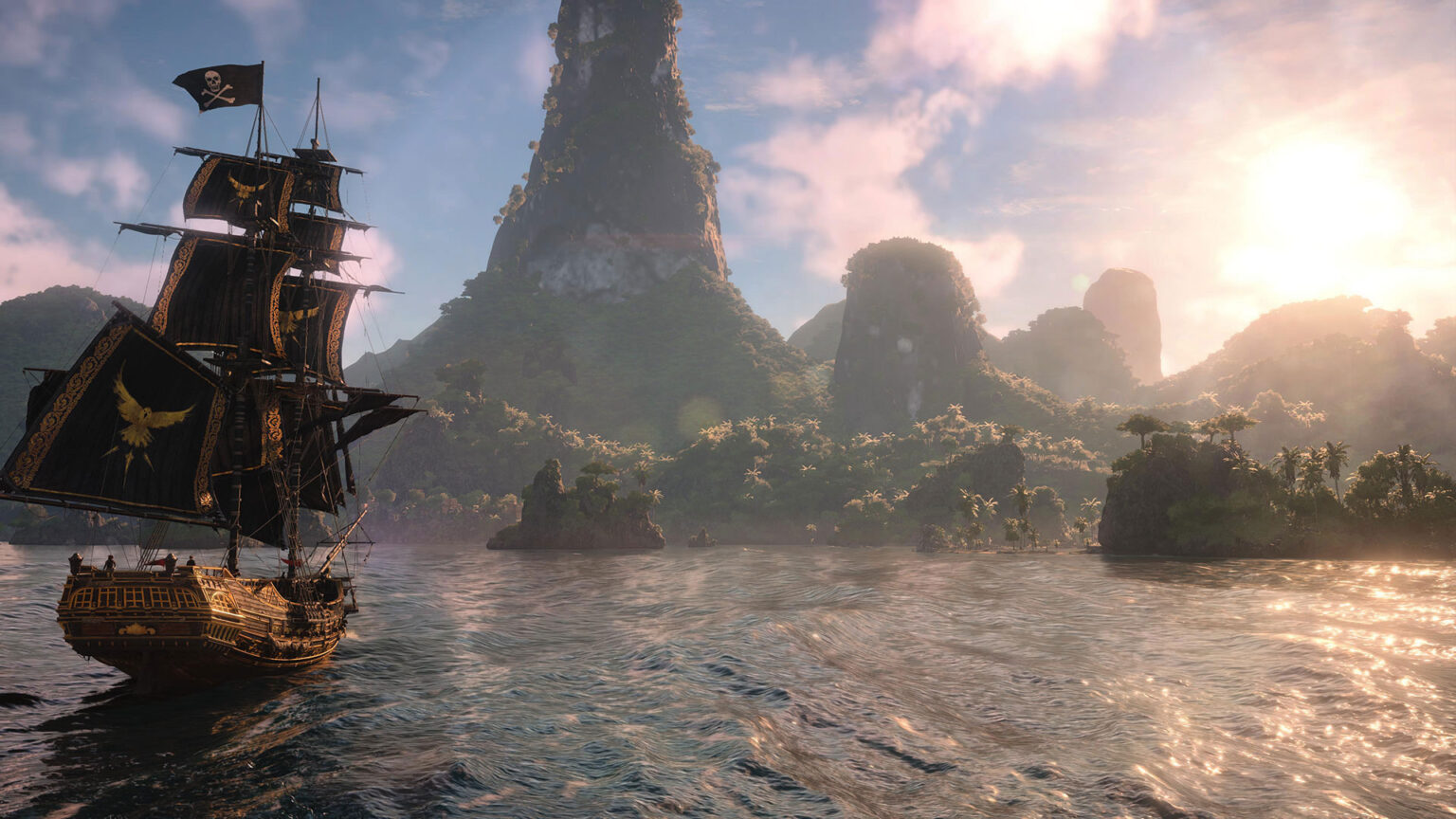
The sea, however, remains the game’s greatest showcase. The waves look more natural than ever, the foam crashing against your ship’s hull adds a convincing sense of realism, and during storms the ocean truly reveals its dangerous side. Dynamic weather completes the illusion, with shifting clouds, strong winds, and heavy rain affecting not only the overall atmosphere but also swaying trees, billowing sails, and the characters’ clothing, making the Caribbean feel even more alive. Honestly, wood has never looked this soaked, and sand has never felt this convincingly compact.
When it comes to gameplay, Assassin’s Creed Black Flag Resynced remains remarkably faithful to the original. You’ll still spend most of your time sneaking through enemy territory, engaging in melee combat, freerunning across rooftops, and, of course, sailing the Caribbean with a fully armed ship at your command. That said, the developers haven’t left the core mechanics untouched. Combat feels noticeably faster and smoother, placing greater emphasis on chaining combos, perfectly timed parries, and stylishly dispatching multiple enemies in quick succession. It doesn’t reach the depth of a dedicated action game, but fights have far more momentum than before and no longer boil down to mindlessly mashing a single button. Enemies can still catch you off guard, so paying attention to your surroundings and choosing the right moment to strike is more important than ever. Otherwise, Edward quickly reminds you that, despite the pirate fantasy, he’s still just a man—not someone who casually chews cannonballs for breakfast. Every hit carries satisfying weight. It may not quite match the punchy combat of last month’s blockbuster, 007 First Light, but it’s still consistently enjoyable.
 Freerunning has also received a welcome overhaul, and it’s one of the first improvements you’ll notice. Movement feels smoother, with additional traversal options including chained jumps and more flexible sideways or backward transitions. As a result, navigating rooftops, ship masts, and other structures feels much more fluid than before. What I appreciated most, however, was the increased sense of control. More often than not, I felt like I was directing Edward instead of fighting against him. Of course, it wouldn’t be an Assassin’s Creed game if the protagonist didn’t occasionally decide to climb a random wall or lamppost when I was clearly aiming somewhere else. At this point, that feels almost as iconic as the franchise’s trademark Leap of Faith. Even so, parkour feels far more modern than it did back in 2013. That’s hardly surprising considering how many Assassin’s Creed games have been released since then. Ubisoft has had well over a decade to refine the formula, and it’s nice to see some of those lessons making their way back into Black Flag.
Stealth has seen several meaningful improvements as well. While it still relies on the familiar mechanics fans will instantly recognize, it makes much better use of classic social stealth. Blending into crowds, taking advantage of the chaos in busy ports, hiding in darker corners, or simply waiting for the weather to create the perfect opportunity all become viable strategies. Dynamic lighting also enhances the atmosphere, making stealth sequences feel more immersive than ever. This is by no means a hardcore stealth simulator, and sooner or later most missions will inevitably escalate into a chase or an open fight. But whenever the game allows you to remain undetected, it’s incredibly satisfying, capturing the feeling of eliminating your target before anyone even realizes you were there.
Sailing and naval combat have always been Black Flag’s greatest strengths in my eyes, so I’m glad the developers gave them the attention they deserved. The new water simulation makes every naval encounter even more spectacular. Waves genuinely affect your ship’s handling, storms can severely limit visibility, and rain-soaked decks, masts, and sails make excellent use of the game’s ray-traced lighting. More importantly, though, these improvements aren’t just visual eye candy. The mechanics remain just as enjoyable as ever. After only a handful of battles, I found myself instinctively positioning my ship for the perfect broadside, timing devastating volleys, or disappearing into heavy rain to shake off pursuing enemies. It’s one of those gameplay systems that quickly becomes second nature.
All of this complements the pacing of the story remarkably well. Without revealing any major plot points, Edward Kenway’s journey still revolves around the conflict between his pursuit of fame and fortune and his growing connection to the Assassin Brotherhood. Freedom on the high seas comes at a price, and it isn’t measured solely in glittering Caribbean gold. Throughout the adventure, Edward is forced to face the consequences of his own choices, while the updated presentation makes those emotional moments even more effective. More detailed character models, subtler facial expressions, improved cinematic direction, and refined dialogue help make a familiar story feel surprisingly engaging all over again. To me, that’s one of the remake’s greatest achievements. Rather than trying to rewrite a beloved story, it simply gives you an even better reason to experience it once more.
After spending well over a dozen hours with Assassin’s Creed Black Flag Resynced, one of the things I appreciated most was its pacing. On PlayStation 5, players can choose from several graphics modes depending on their preferences. There’s a 60 FPS Performance Mode, a 40 FPS Balanced Mode for 120 Hz displays, and a traditional 30 FPS Quality Mode that delivers the most impressive visuals. Personally, I spent almost my entire playthrough in Performance Mode. The added smoothness makes such a noticeable difference during freerunning, combat, and naval battles that it was difficult to go back to the other options. That said, I occasionally switched to Quality Mode just to stand on a cliff and admire the Caribbean scenery for a few minutes. It may sound a little strange, but this world has an incredible ability to make you stop and simply take it all in.
Combat continues to reward patience and good timing, freerunning offers far more freedom than it used to, and dynamic weather can completely transform the feel of a mission. There are moments when a peaceful voyage suddenly turns into a desperate battle against the elements, and those are the experiences that stay with you long after you’ve put the controller down. It’s also worth mentioning the introduction of a few light RPG mechanics that were virtually absent from the original game. Don’t worry, though—this is nothing like the sprawling systems found in Valhalla. Everything here is implemented with restraint and never feels overcomplicated.
On the other hand, the game still carries some of the baggage of its original 2013 release. A number of side activities remain fairly repetitive, collectibles are still scattered around largely for the sake of having collectibles, and the infamous tailing missions can be just as frustrating as ever. (Following a ship… with another ship? Yep, that’s still a thing.) The most annoying moments are when enemies somehow detect your presence even though everything seemed to be going according to plan. (And yes, those ship tailing missions deserve another mention.) None of these issues are serious enough to ruin the experience, but they do serve as a reminder that, beneath all the modern upgrades, this is still a game built on foundations laid more than a decade ago.
From an audiovisual standpoint, it’s difficult to find much to criticize. This is where the remake’s development effort is most obvious. The lighting looks fantastic regardless of which graphics mode you choose. Sunrises and sunsets are breathtaking, storms have a real sense of weight and intensity, and rain-soaked decks or puddles after a downpour are surprisingly mesmerizing to look at. Then there are all the smaller details—improved vegetation, smoother animations, and hair that reacts naturally to both wind and weather. It’s exactly these subtle touches that make Black Flag Resynced feel like a genuine remake rather than an old classic with a higher resolution and a few extra graphics options.
The audio deserves special praise as well. Alongside the remastered soundtrack, the developers have added several new musical tracks and extra sea shanties. It may seem like a small addition, but it goes a long way toward strengthening the pirate atmosphere. It’s hard not to smile when your crew suddenly breaks into song during another voyage across the Caribbean. Dolby Atmos also makes a noticeable difference, allowing you to pinpoint an approaching storm or the direction of incoming cannon fire with impressive precision. The sounds of bustling ports, crashing waves, and creaking wooden decks create an incredibly immersive soundscape. DualSense support adds even more to the experience. The haptic feedback and adaptive triggers don’t fundamentally change the gameplay, but they make storms, naval battles, and steering your ship feel considerably more engaging.
If I had to point to the greatest strengths of Assassin’s Creed Black Flag Resynced, I’d start with its world. The Caribbean looks absolutely stunning, and exploring it never stops being rewarding. Whether you’re wandering through lively ports, cutting your way across dense jungles, or setting sail toward another distant island, there’s almost always something worth admiring. Freerunning is another highlight, finally offering a greater sense of control over Edward’s movements, while the revamped combat system encourages players to take advantage of its mechanics instead of simply button-mashing their way through encounters. Add to that three graphics modes that let everyone choose between maximum performance and visual fidelity, plus roughly six hours of brand-new story content unavailable in the original release, and the package becomes even more compelling. If that doesn’t convince you to return to the Caribbean, I’m honestly not sure what will.
That doesn’t mean everything works perfectly, though. Some side missions still suffer from repetitive design, often asking you to perform the same tasks in different parts of the map. Despite its noticeable improvements, freerunning occasionally has a mind of its own, sending Edward exactly where you didn’t want him to go. And then there are the tailing missions. Unfortunately, even after the remake, they still have a knack for disrupting the game’s otherwise excellent pacing. It’s one of the few areas where I wish Ubisoft had been a little bolder instead of staying so faithful to the original.
So, who would I recommend Assassin’s Creed Black Flag Resynced to? First and foremost, fans of pirate adventures and open-world exploration. If you enjoy setting your own course, engaging in thrilling naval battles, and constantly sailing toward „just one more island” to see what’s waiting there, you’ll probably lose yourself in this world for dozens of hours. It’s also an excellent choice for players who experienced the original years ago and want to revisit Edward Kenway’s adventure in a far more modern form. On the other hand, if you’ve grown tired of massive maps packed with repetitive activities and countless map markers, you may want to approach Black Flag Resynced with tempered expectations. Despite all its improvements, this is still the same classic Assassin’s Creed—only prettier, smoother, and much more enjoyable to play.
On a more personal note, Assassin’s Creed Black Flag Resynced is exactly the kind of pirate adventure I always find myself wanting to return to. Sure, not every gameplay mechanic has aged gracefully, and every now and then the game’s origins begin to show. But the moment you set sail across the open sea, hear your crew burst into song, and listen to the thunder of cannons echoing across the Caribbean, it’s easy to remember why Black Flag has remained one of the franchise’s most beloved entries for so many years. After spending more than twenty hours with the PlayStation 5 version, I never found myself wanting to put the controller down. Quite the opposite—I kept looking for one more fort to conquer, one more island to discover, and one more excuse to raise the sails. That’s probably the highest recommendation I can give a game like this.
Final Score: 8/10
For newcomers to Black Flag, I’d probably rate it even higher.
I would like to thank Ubisoft for providing a review copy of the game ahead of release.