
Starting my adventure with The Blood of Dawnwalker, it was hard not to feel a little like I was walking through the dark streets of The Witcher 3. Except here, the sun can be just as important as the night, and instead of another contract to deal with a drowner, there might be a vampire around the corner who would be more than happy to make a meal out of me. This is the first major production from Rebel Wolves – a Polish studio founded by former CD Projekt RED developers – and published by Bandai Namco. The fact that I got to play the game before its release was particularly special to me. So, thank you to Rebel Wolves for providing me with a review code. I always try to check out games made by Polish teams and, whenever possible, support them on their bumpy journey towards reaching potential players. So, with that said, let’s get into the review!
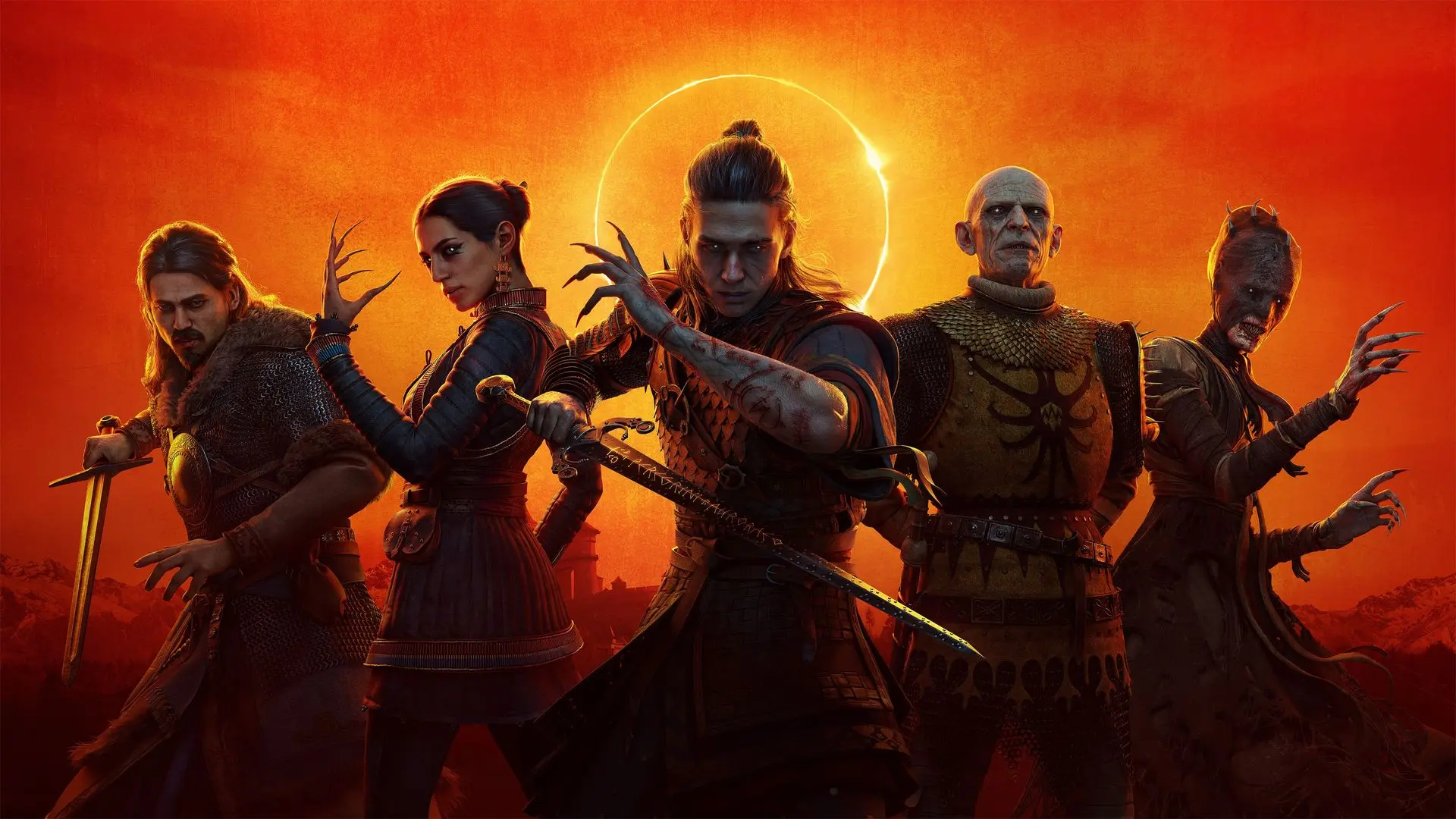
The Blood of Dawnwalker tells the story of Coen of Laslei, a simple young man living in 14th-century Romania. His peaceful life comes to an end when the area is taken over by the Varkir, the vampires of this world. When his family is kidnapped by the powerful Brencis, Coen barely escapes with his life. But nothing comes for free, and Brencis’s attack comes at a price – a rather unusual transformation. During the day, he remains human, while at night he becomes a Dawnwalker – a bloodthirsty creature capable of wielding vampiric powers.
And this idea is one of the more interesting elements of the entire game. Day and night are not merely a change in lighting here. Depending on the time of day, Coen has access to different abilities, and the world itself begins to function somewhat differently. During the day, he relies on his sword and human abilities, as well as the more favorable attitudes of NPCs, while after dark he can resort to much more brutal solutions, including feeding on innocent people, animals, or somewhat more deserving monsters.
There are also the grim Carpathian landscapes, medieval settlements, and an atmosphere that immediately suggests this is definitely not the kind of place where you would want to take a solitary walk through the forest after sunset. And while the comparisons to The Witcher come almost automatically, it quickly becomes clear that Rebel Wolves is trying to build something more here than just another game pretending to be a CD Projekt production.
The world of The Blood of Dawnwalker is very easy to get into if you like a gothic, heavy atmosphere. Grey ruins, foul-smelling swamps, lonely forests, snowy peaks, and small, impoverished villages create a place where even an ordinary walk can make you start suspiciously looking around for something that might jump out from behind a tree. It is certainly not a particularly cheerful place, but it is hard to deny its charm.
The story itself is one of those elements that can really pull you in. Coen’s story is not simply a matter of “his family was kidnapped, so now we have to rescue them.” The deeper I get into this world, the more conflicts, difficult decisions, and characters who are not as straightforward as they initially seem begin to emerge. I also like the fact that the game does not constantly try to bombard me with huge plot twists. Instead, it takes its time building the story and letting me get to know both Coen and the humans and vampires who inhabit this grim world. That is what made me feel that my decisions actually mattered, rather than simply being dialogue choices that lead to two slightly different lines.
Outside of the main story, there are quite a few side quests, and I have to admit that they can really pull you in. As I made my way through different villages and forests, I came across small stories, mysteries, and problems faced by the local inhabitants. More importantly, they don’t feel like typical filler quests along the lines of “go to point A, fetch something from point B, and come back.” In fact, I get the impression that there are hardly any truly generic quests here. Instead, we get smaller stories with their own characters, which often give us a better look at the world and the people living in it. At times, they reminded me of the short stories found in The Witcher 3, and more than once I caught myself spending far more time on a quest that was supposed to take me fifteen minutes.
Not all of them are equally good, though. There are quests that initially seem genuinely intriguing – we find notes, learn a fragment of a story, and start wondering where all of this is going to lead. Then we reach our destination, have a short fight, and that’s pretty much it. Sometimes this is perfectly justified, such as in the story of the zombie nun lurking in a dungeon, where the enemy itself is part of the story. Unfortunately, in many other cases, the enemies seem to be there simply because someone had to put them there. Something is missing that would make their presence feel more meaningful. It’s a shame, because given the quality of many of the other quests, these shorter stories could really have used a little more substance.
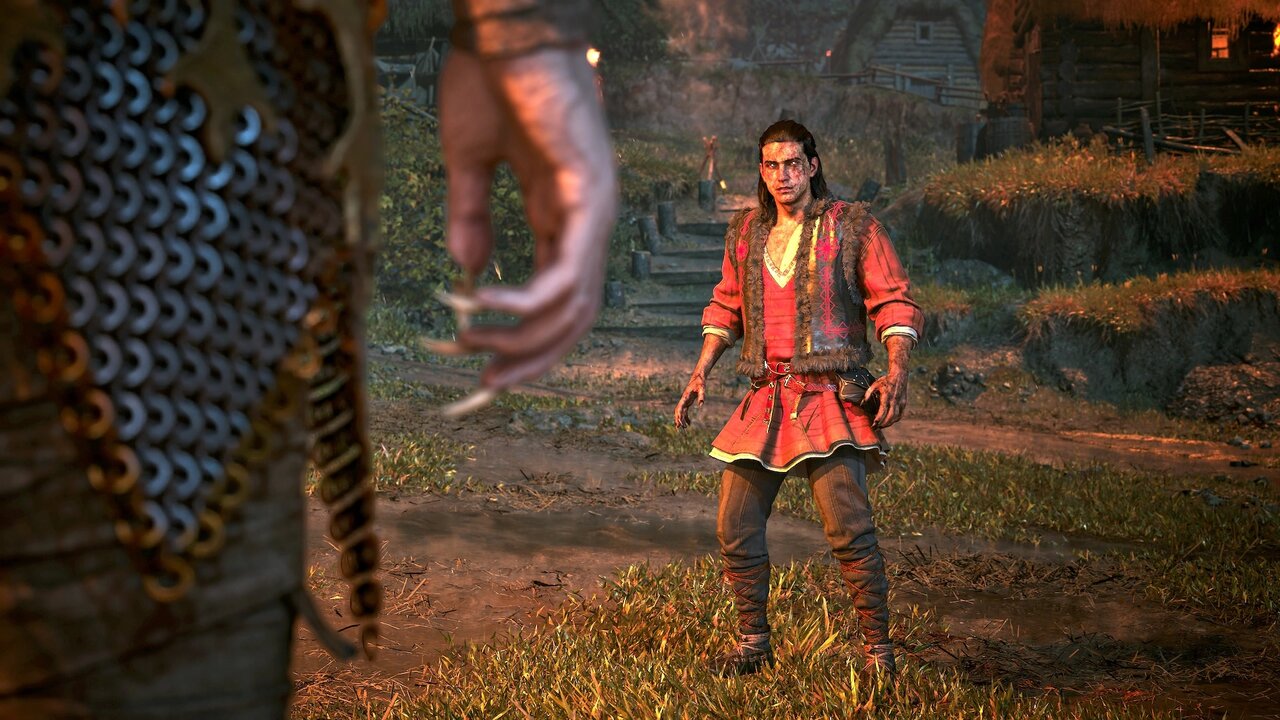
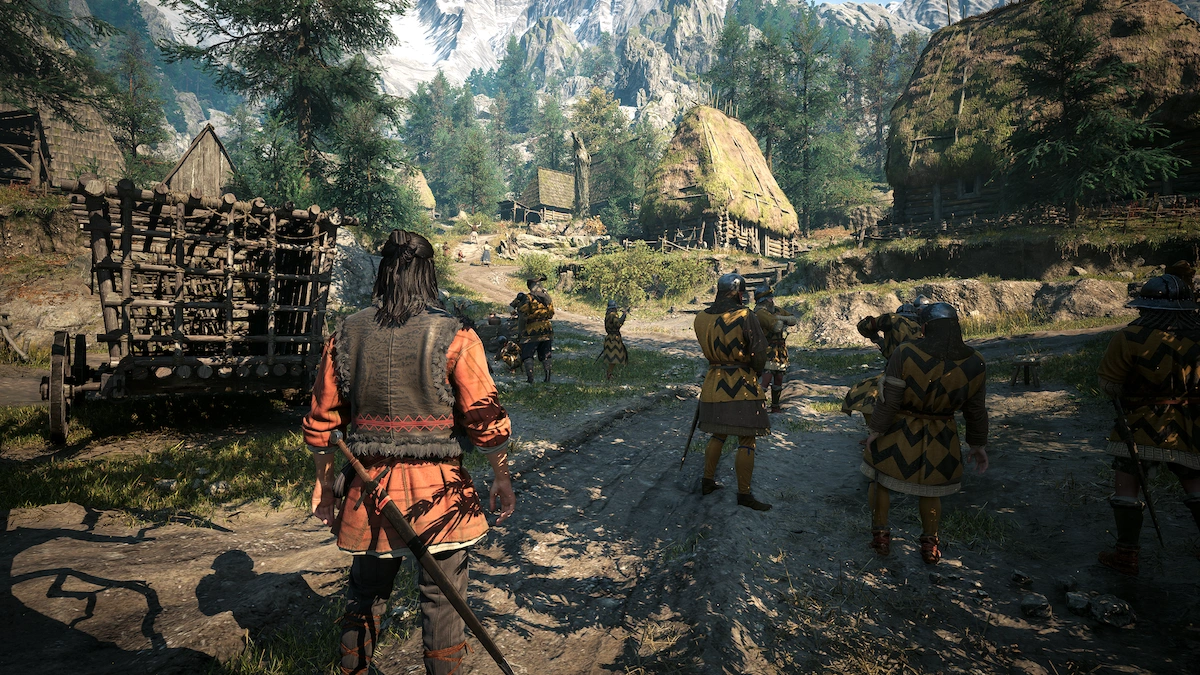
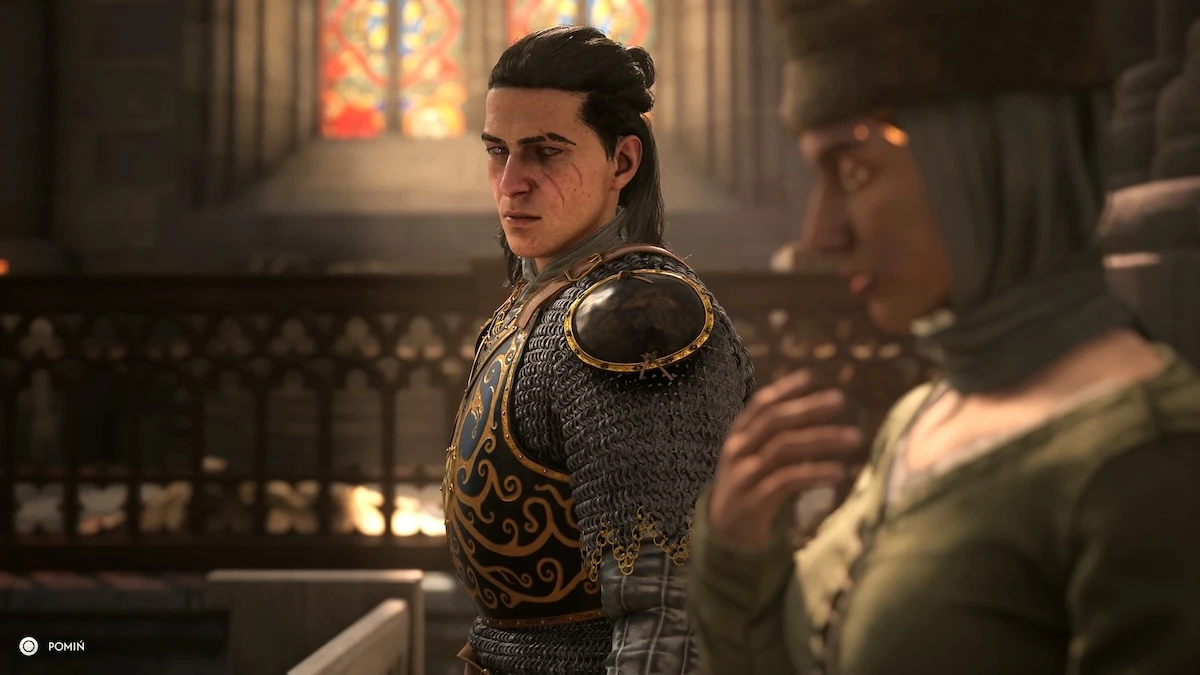 Technically, it’s solid enough. The character animations may not be particularly impressive, but they don’t get in the way either. Sword strikes have an appropriate weight to them, enemies react to being hit, and even when the blade connects with a wall, you can feel that Coen was actually trying to cut through it rather than gently caress it. The most important thing, however, is that the game runs smoothly, and I didn’t encounter any problems during my playthrough that pulled me out of the world. The combat system reminded me of Kingdom Come: Deliverance at times. You can’t just mindlessly swing your sword – you have to watch your opponent, block their attacks in the right direction, and react to what’s happening in front of you. Small icons indicating the direction of an incoming attack help with this. If someone considers this too much of a helping hand, they can turn the indicators off, particularly at higher difficulty levels.
The RPG elements are also an important part of the experience. You have to manage your stamina wisely, and as Coen develops, we unlock new abilities across three main skill trees: Sword Mastery, Witchcraft, and Vampirism. This is where things get really interesting, because there are plenty of options for developing the character, and some abilities can significantly change the way we approach combat. There are also some much flashier toys to play with. As time goes on, Coen gains access to abilities that would have seemed completely overpowered just a few hours earlier. Vampirism is definitely not just a cosmetic addition, and unlocking new abilities gives you a satisfying sense that the character is genuinely becoming more powerful. At the same time, you have to be careful not to turn the whole system into mindlessly spamming the strongest perks. There are enough options to experiment with different builds and adapt Coen to your preferred playstyle. And that is what I like most about it – Dawnwalker doesn’t constantly try to hold my hand. Instead, it gives me the tools and lets me decide how much of a human, and how much of a monster, I want to be. Interestingly, most skills can’t simply be learned out of thin air. You have to search, search, and search some more to collect enough books about a particular ability before you can even think about purchasing it. I actually think it’s a great solution, and whatever we don’t find will probably be sitting somewhere in a local merchant’s inventory.
What I enjoy most, however, is using Coen’s vampiric powers. Once night falls, he gains access to abilities that can completely change the course of a fight. He can instantly leap several dozen feet, appear behind an enemy, and drain their blood while restoring his own health in the process. In the right hands, he can turn a group of enemies into quite a feast. Vampirism is useful outside of combat as well. The ability to move across walls and ceilings opens up plenty of additional possibilities when exploring the world. Coen can climb vertical surfaces, bypass obstacles, and reach places that an ordinary human would never be able to access. And it is moments like these that really show that the developers didn’t treat vampiric abilities as nothing more than a flashy addition to the combat system.
Of course, being a vampire also comes at a price. Coen needs blood, and if we leave his hunger unsatisfied for too long, problems start to appear. The game can remind us of this in some rather amusing ways, as hunger also affects certain interactions with other characters. So approaching every person we meet with “hello, I’d just like to have a little chat” isn’t always the best idea. What’s more, if Coen’s hunger becomes severe enough, it can actually choose a dialogue option for us if we put the controller down for a moment. And I can guarantee that whatever comes out of his mouth will have very little to do with an actual conversation.
I also like the investigation system. In certain situations, we can take a closer look at our surroundings, find important objects, and piece together different elements of a story. It’s one of those additions that sometimes makes me stop simply trying to complete a quest and start digging around the entire area, because I want to know what actually happened before I arrived.
The problem lies elsewhere. The entire adventure is limited by a ticking clock. Coen has 30 days to rescue his family before Brencis’s coronation, and certain actions consume some of the available time. Each day is divided into 16 units, so we can’t wander around the world forever while putting the most important matters off until later. A full day/night cycle takes around half an hour of gameplay, but there are also specific activities that simply eat into that time. Want to get into a storage room, but a boy is blocking the way? Help him clean up and he’ll let you in – but the game will eat up 2 units of time in the process. On the one hand, I really like the idea. The time pressure means you sometimes have to make a choice: help a stranger you happen to meet or move on with the main quest? On the other hand, it’s hard not to feel a slight disconnect when the game gives me such an interesting world to explore while constantly reminding me that the clock is ticking. Fortunately, the time limit isn’t quite as brutal as it might initially seem. Side quests don’t simply disappear because we decided to focus on something else. We can return to them later, and characters we’ve met earlier will still be waiting for our help. This means that the time pressure applies primarily to the main storyline rather than every little activity.
Even so, I can’t help but feel a little disappointed that I can’t simply slow down and enjoy this world. Because when I start reading notes, exploring abandoned buildings, and checking what’s waiting beyond the next hill, the last thing I want to think about is how many units of time I’ve just spent.
On PlayStation 5, the game runs generally smoothly. I didn’t notice any dramatic drops in performance – the 30 FPS Quality Mode is stable, although it’s a shame there isn’t a proper 60 FPS Performance Mode. There are occasional brief stutters, but they are rare enough that they never ruined my experience. More noticeable was the pop-in: sometimes textures and environmental elements load at the last possible moment – especially when sprinting along wilderness paths or switching to the resolution-focused mode. It’s not a disaster, but it can interfere with immersion. The DualSense controller performs flawlessly – I can feel the appropriate resistance and vibrations with every sword strike and every roar from a beast. The camera is generally fine, although I occasionally lost track of an enemy during larger fights; it’s not something I found particularly frustrating, though.
The sound design also does a great job. In the background, you might hear a church choir, only for a moment later to be interrupted by a scream or some other sound that I definitely wouldn’t want to hear while wandering through a forest alone. The sound design does a great job of building the atmosphere, rather than simply filling the silence. I was particularly impressed by the Polish voice acting. The characters sound natural, and I never had that familiar feeling that the actors were simply reading their lines from a script. Interestingly, the original voice track is just as good. Things don’t always line up perfectly with the characters’ lip movements, though, but that’s the nature of dubbing – although you’d think a video game could put a little more effort into getting that right.
The music does exactly what I expect it to. It subtly builds tension during exploration and combat, but never tries to steal the spotlight. These aren’t melodies I’ll be humming in the shower after a dozen hours, but they do their job very well while I’m playing.
To sum it up, The Blood of Dawnwalker is far from a flawless game. The time limit can be frustrating, there are some minor technical issues, and certain encounters can be more challenging than I’d like. Even so, after spending several dozen hours with the game, none of these things managed to overshadow what matters most.
Because Dawnwalker has a character of its own. It’s not simply an attempt to recreate the success of The Witcher 3, even if the inspirations are sometimes very obvious. What I liked most was the way Rebel Wolves used vampirism not only as part of the story, but also as the foundation of the gameplay. Day and night really do matter, the way we fight changes as Coen develops, and being able to use his vampiric abilities provides a lot of satisfaction.
I spent several dozen hours with The Blood of Dawnwalker, and for most of that time I wanted to keep checking what was waiting beyond the next hill, in the next village, and behind the next door. For me, that’s one of the simplest indicators of a good game. If the goal of Rebel Wolves’ debut was to show that a Polish studio can create its own large-scale RPG and do it with a clear sense of identity, it’s hard to call that experiment unsuccessful. Coen’s adventure isn’t the new The Witcher 3, and it doesn’t need to be. It’s a very successful debut from Rebel Wolves that left me wanting to spend another dozen hours in this world. That’s why, in my case, it earns a 9/10. And the fact that they haven’t rested on their laurels and have already started putting together the second game? That’s something I can applaud.