
There are games where, after just a few hours, I already know I’m going to have a hard time giving them a score. Not because they are bad – sometimes quite the opposite. They have plenty of elements that could make them genuinely enjoyable, but as time goes on, certain things start to stand out more and more. At first, you can ignore them. Then you start noticing them, and eventually you realize that instead of focusing on what the game does well, you’re increasingly thinking about whatever just annoyed you. Marvel’s Wolverine is exactly that kind of game. And I think the biggest problem with it is that it was released in 2026.
Sounds absurd? Maybe. After all, it’s hardly fair to blame the developers for when they decided to release their game. In this case, however, the timing matters a lot. If Marvel’s Wolverine had arrived near the end of the PlayStation 4’s life cycle, or had been one of the first major releases on PlayStation 5, I would probably be writing a very different review right now. Back then, some of the things that annoy me today could have made a really strong impression, and the game itself could have been a great showcase for the new generation. After all, this was supposed to be a brutal, much more mature superhero game from a studio that had just proven it knew how to bring comic book characters into the world of video games in a way we hadn’t really seen before.
Instead, it’s already 2026. The PlayStation 5 has been with us for several years, and along the way we’ve had not only the first Spider-Man, but also its sequel, which was a 10/10 game for me and set the bar extremely high for Insomniac’s next productions. And that’s exactly why Wolverine sometimes feels like a game that simply arrived a little too late. Some of its design choices, visuals and approach to gameplay would have been much easier for me to accept five years ago, when the new generation was still finding its footing. Today, after playing so many great action games, expectations are simply higher, and it’s hard to pretend I don’t see certain things.
And that’s a shame, because Wolverine is practically the perfect character to build a great game around. He doesn’t need another huge open world filled with hundreds of markers, random activities and a map packed with content that we stop caring about after a few hours anyway. Logan needs brutal combat, a great story, the right amount of violence, and that feeling that we are actually stepping into the shoes of one of Marvel’s most iconic characters. And for a while, Marvel’s Wolverine really does deliver on that. The problem begins when you realize that underneath all that brutality is a game that is much more conservative, linear and repetitive than you might have expected from a title we had been waiting for so long.
The biggest problem I have with Marvel’s Wolverine is its overall structure. I know Insomniac made it clear from the beginning that this wasn’t going to be another huge open-world game, and honestly, that’s a good thing. Wolverine doesn’t need another map filled with a hundred activities, towers to unlock and random crimes popping up every three minutes. The problem is that there’s a huge amount of space between “we’re not making an open-world game” and “we’re going to lead the player through corridors almost all the time,” and I feel like the game often fails to make use of it. We walk, turn, fight, keep walking, open a door, fight again, climb something, and before long we’re doing exactly the same thing all over again. After a few hours, this formula simply started to wear me down, especially since most locations make it painfully obvious where we’re supposed to go. There are invisible walls, blocked-off paths and areas that only look bigger at first glance, because as soon as you try to stray from the intended route, you quickly realize there’s really nowhere to go.
Thankfully, the story itself is much more interesting and manages to make up for some of these limitations. Three years earlier, Logan left Team X and tried to leave behind a life he probably never wanted in the first place, but of course it quickly turns out that you can’t simply walk away from being Wolverine. When Bolivar Trask starts abducting mutants, Logan is pulled right back into the middle of the conflict, and along the way he crosses paths with Jean Grey, Sabretooth and Mystique, among others. Then there’s Logan’s own past, much of which he doesn’t fully remember, so as the story progresses, we uncover more pieces of his earlier life and his connection to Team X. It makes for a fairly enjoyable mix of rescuing mutants, old relationships, betrayals and, of course, trying to figure out what actually happened in Logan’s past. I also liked the fact that Insomniac didn’t keep the entire story in one location. We travel to places including Canada, Japan and Madripoor, giving the different parts of the adventure at least somewhat distinct identities.
It’s probably not a story I’ll remember for very long after finishing this review, but for most of the game I genuinely wanted to know what would happen next, and some of the relationships between the characters managed to keep me interested. The problem is in the way that story is delivered. The game very often interrupts its more interesting moments with another combat sequence or a simple trip from point A to point B, which can really hurt the pacing. There’s nothing inherently wrong with linearity – you can make a fantastic game that follows a single path from beginning to end. Here, though, I increasingly felt that I wasn’t really taking part in Wolverine’s adventure. I was simply moving from one scene to the next, performing exactly the same tasks along the way. And that’s a shame, because there was genuinely room for more in this story than just another corridor, another fight and another map marker.
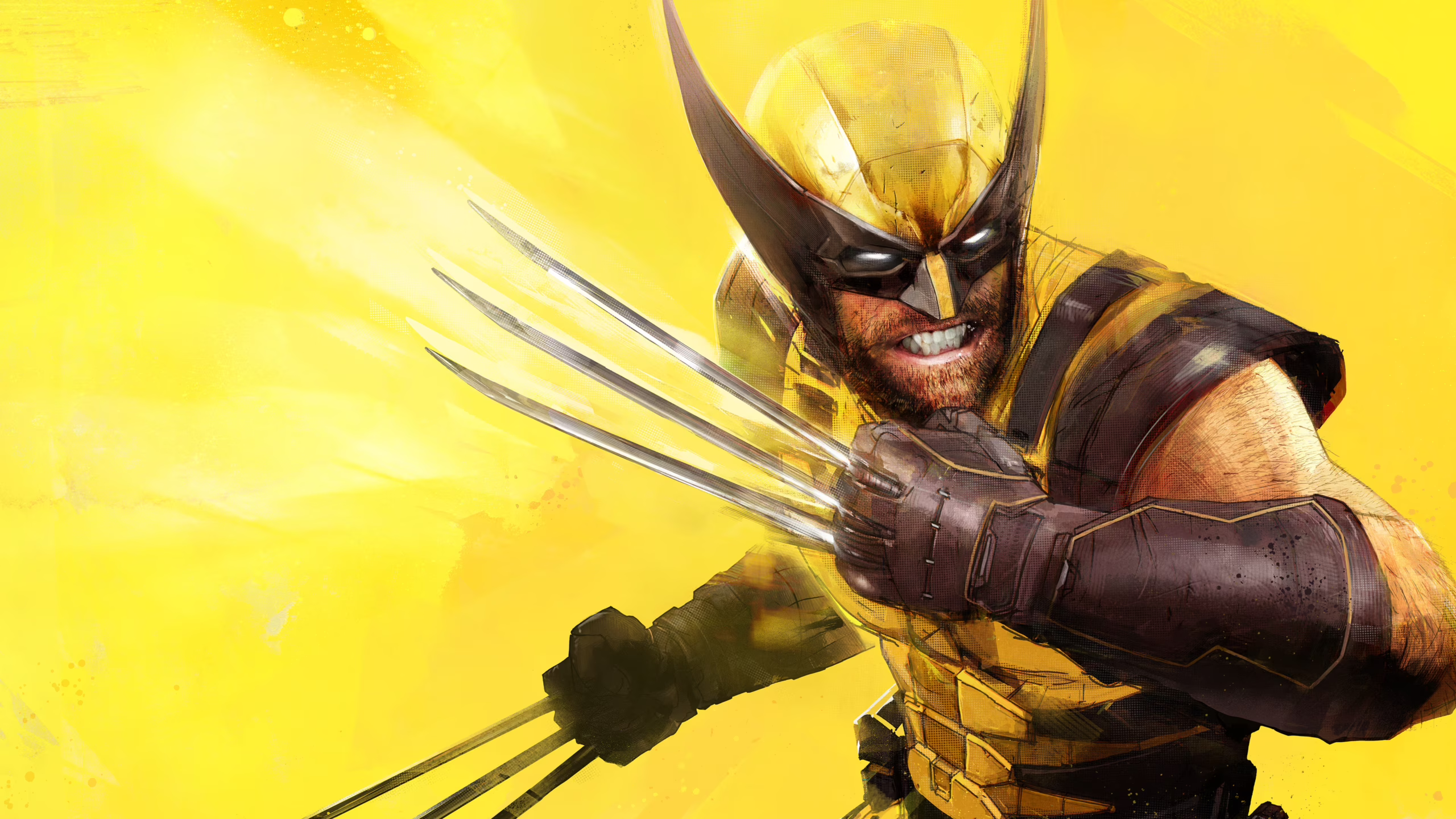
I really liked the beginning. After all, Wolverine has claws, Wolverine is brutal, and Wolverine should primarily be about hurting anyone who gets in his way. And for the first few hours, that’s exactly what we get. We jump into a group of enemies, hit square, then square again, maybe triangle, throw in a dodge, hit square once more, and suddenly Logan is flying across half the room, driving his claws into another guy, and it looks genuinely spectacular. There’s a lot of satisfaction in it, and Insomniac does a very good job of capturing the brutality of the character. The problem starts when you realize that square, square, triangle is basically your entire life.
Of course, the combat system is more complex than that description makes it sound. We have parries, special attacks, different abilities, character progression and Rage, so technically there are quite a few options available. The problem is that after a while, I simply felt less and less inclined to use them because the basic formula remained almost exactly the same. First there were a few enemies, then there were more of them, then the more heavily armored ones started showing up, and eventually I got the impression that the game was simply adding another layer of armor and saying: “Alright, now you have to do exactly the same thing, only three times longer.” Instead of feeling like I was developing my skills and becoming an increasingly powerful Wolverine, I increasingly felt like I was fighting one training dummy after another.
The strangest part is how this works with regular enemies. On the one hand, they can take a ridiculous number of hits to the face, enough to end most people’s careers several times over, while on the other, they often don’t pose much of a threat to me. So I can spend a good while beating the living hell out of some guy who apparently has health insurance that covers full-body regeneration, while he himself is barely capable of hurting me. And this is where the game starts to lose sight of what Wolverine is supposed to be. I’m playing a guy who is practically a walking killing machine, and whose greatest advantage is that he is extremely difficult to kill. Yet towards the end of the game, I found myself wondering why an ordinary human being needed fifteen swings of my claws before finally deciding to fall over.
And instead of feeling satisfied, I started feeling tired. The first few hours with the claws are great. The next few start to feel like working on a piece-rate. And with a game that lasts around 12–13 hours, that’s a lot of time spent repeating the same patterns.
The situation with the bosses is even worse, because this is where the game can really throw you off balance. On every difficulty level I tried, they could be absurdly powerful, and it wasn’t even a matter of learning their attacks or getting the timing of your dodges right. A difficult boss can be one of the best things in a game, especially when, after a few attempts, you start to understand their behavior and eventually beat them without too much trouble. Here, though, I sometimes felt like someone had simply pushed the slider labeled “boss damage” way too far.
It becomes even more noticeable when you compare them to regular enemies. Those guys can be absolute damage sponges, so I can slash them with my claws, throw them across the room and take them on a little sightseeing tour of the nearest wall, yet they’re still standing there, apparently waiting for their turn. At the same time, they often aren’t particularly dangerous. Then a boss shows up who apparently didn’t get the same memo as everyone else, because suddenly a few attacks are enough to leave Logan lying on the floor wondering what the hell just happened. The difference is so huge that it’s difficult to talk about a smoothly escalating difficulty curve.
And this brings us to another problem: the way the game portrays Wolverine himself. In the cutscenes, Logan survives things that would leave an ordinary human being as nothing more than a memory. He falls from enormous heights, gets crushed, takes injuries that should bring the entire story to an abrupt end, and then simply dusts himself off and carries on as if he had tripped on the sidewalk. You can drop an entire skyscraper on him in a cutscene, and five minutes later, during actual gameplay, a kick from some level-one goon can kill him. Of course, I understand that a game needs its own rules, and you can’t make Logan completely immortal, because then it would be difficult to create any kind of challenge at all. The problem is that those rules sometimes feel so disconnected from what the developers themselves show us in the story that instead of feeling like I’m actually playing as Wolverine, I start wondering whether I accidentally picked up some particularly aggressive RPG instead.
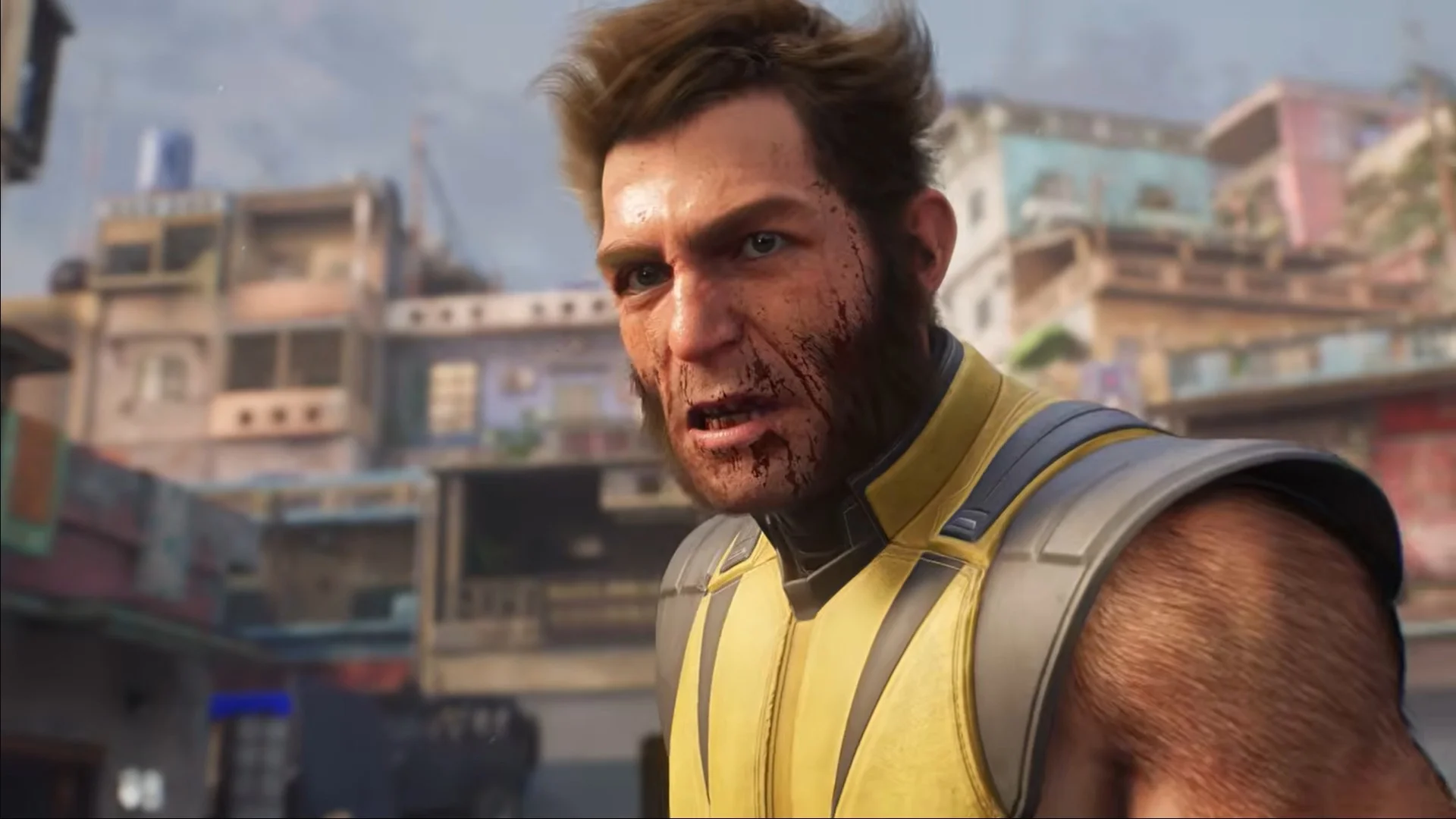
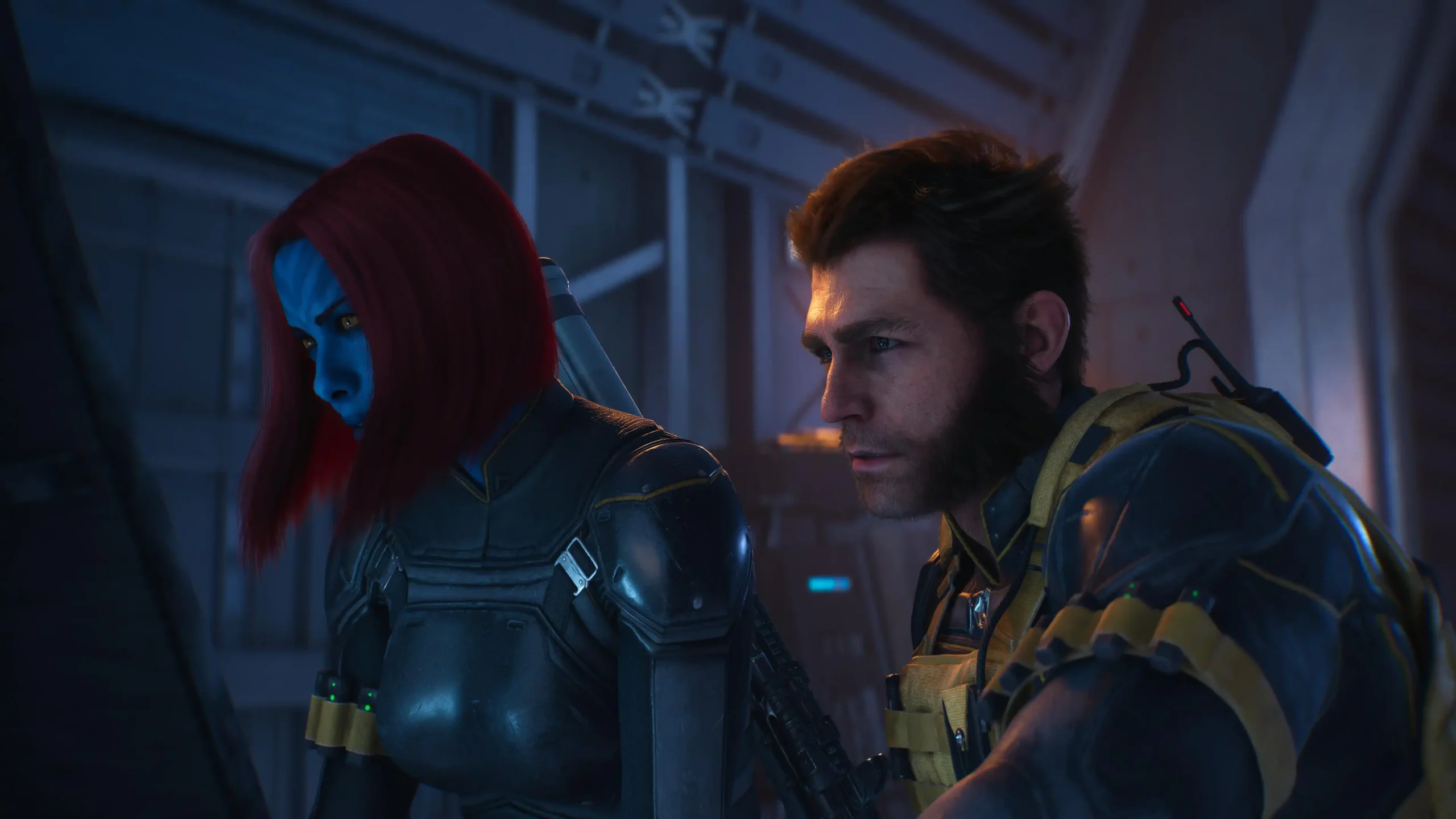
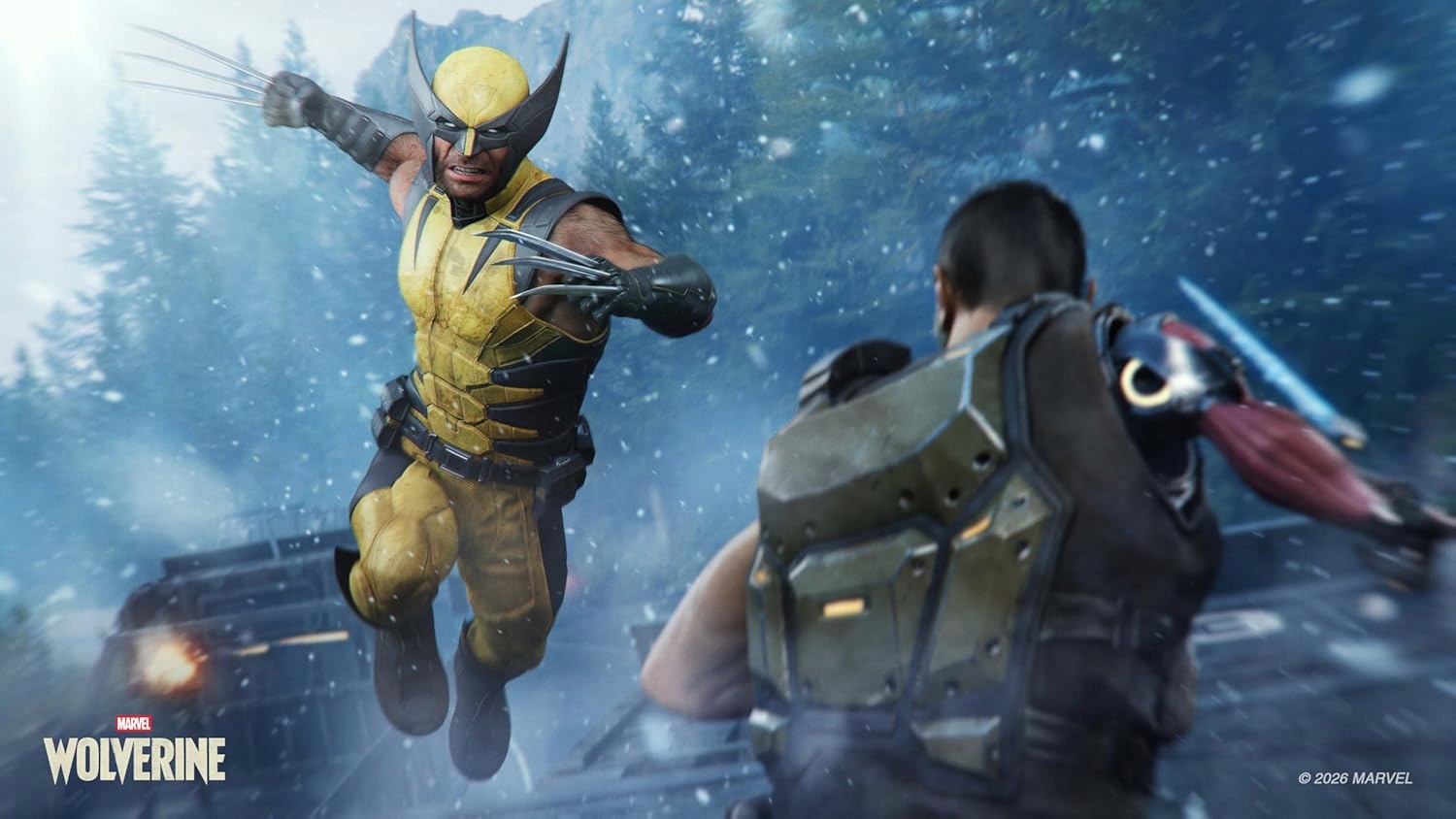
I probably have my biggest problem with the graphics, because Marvel’s Wolverine can look absolutely fantastic one moment and then do something that looks like a joke the next. The character models, faces, animations and cinematic sequences can make a really strong impression, and it’s obvious that we’re dealing with a big AAA production, but sometimes all it takes is turning the camera slightly to the side for some of that magic to disappear. Next to a highly detailed Logan, you can suddenly find a texture that looks like someone forgot to replace it before sending the game off to be printed, while the grass, water and lava can look genuinely terrible. What really stuck with me were those environmental elements that should be pretty much a given in a game like this today, yet somehow manage to look surprisingly dated.
And seriously, if you don’t believe me, just wait until the helicopter scene in Japan. The skyscrapers look like nothing more than cardboard boxes with lit-up windows drawn onto them, like something straight out of GTA 3. It’s one of those moments where you stop looking at the actual action and start wondering how a game released in 2026 managed to make an entire city look like a collection of flat textures from twenty years ago.
It’s not that Wolverine is ugly, because it absolutely isn’t. The problem is the inconsistent quality of the visuals, which sometimes makes it hard to believe you’re even looking at the same game. We get great-looking characters, excellent animations and impressive cinematic sequences, and then, right next to them, there are moments that make you wonder how something like that even made it through quality control. And once again, we come back to that unfortunate fact that it’s 2026 – if Wolverine had come out a few years ago, I probably would have overlooked a lot of these things. Today, especially after what Insomniac has already shown us with the Spider-Man games, it’s much harder to ignore these kinds of shortcomings.
What annoys me most, though, is that the game sometimes sets the bar for itself. I look at Logan’s beautifully rendered face, his animations during combat or a big cinematic sequence and think, “Okay, that actually looks really good.” Then, a moment later, I walk into the water and feel like I’ve just discovered the only body of water in the Marvel universe that Insomniac’s technical department hasn’t gotten around to visiting yet. It’s little things like this that make me focus on the flaws instead of simply appreciating the visuals.
I’m also not a big fan of collectibles that are thrown into a game just so the developers can say there’s some extra “content.” Here we have houses connected to Logan’s memories, whiskey bottles and chests containing items needed to unlock costumes. The idea itself isn’t bad, but the way these collectibles are placed definitely is. There were times when the game was just starting to build up to some bigger action sequence, and instead of moving forward, I would stumble across another little house with a memory inside. Instead of thinking, “Holy shit, what happens next?”, I’d just go, “Oh. A collectible.” It might sound like a small thing, but it was enough to completely break the flow for me. Most of the other activities also give me very little reason to actively seek them out. They’re there, you can do them, but I never felt like I was missing anything important by ignoring them.
There’s also a skill tree, and it’s honestly difficult to complain about it, but it’s equally difficult to find anything particularly memorable about it. We unlock new abilities and upgrade Logan, but the whole system sometimes feels like something that just had to be in the game, because apparently it’s difficult to release a big AAA production these days without skill points, new abilities and several screens full of things to unlock. It doesn’t get in the way, it doesn’t impress me, and it doesn’t fundamentally change the way I play. It’s there because it has to be. And I mostly invested in anything related to health, because the bosses really did give me a hard time.
Just so it doesn’t sound like I’m complaining about absolutely everything – Marvel’s Wolverine is actually pretty solid from a technical standpoint. Throughout the entire campaign, I had no major issues with performance, the game didn’t suffer from any strange stutters, it never crashed, and the transitions between different sections were smooth enough that I never really had a reason to think about them. And that’s exactly how it should be. Technology shouldn’t get in the way of playing the game, and in that respect, Insomniac has done its job. It’s just a shame that when you take a closer look at the visuals and individual environmental elements, the inconsistencies in quality become much more noticeable.
Thankfully, there are things that remind me why I was so excited about this game in the first place. Logan himself is really well done, and Liam McIntyre fits the role very well. The voice acting is good, the character has plenty of personality, and the game definitely doesn’t try to tone Wolverine down. And that’s a good thing, because if you buy a game about a guy with metal claws expecting some kind of family-friendly experience, you probably picked up the wrong Marvel game. There’s plenty of blood, the claws regularly do exactly what they were designed to do, and some scenes can get genuinely brutal. That’s when Wolverine shows what this game could have been throughout the entire campaign – cocky, brutal and giving you the feeling that you’re playing as someone truly extraordinary. It’s just a shame that the game couldn’t maintain that feeling from beginning to end.
The music is one of those elements I don’t have any major complaints about. It does a good job of building the atmosphere and fits the darker tone of the story, although it’s not a soundtrack that will stay with me for long after I turn off the console. It simply does its job. And I think that’s probably the best way to describe a large part of Marvel’s Wolverine – a lot of things work here, but relatively few of them manage to genuinely impress.
And this brings us to the most important point. Marvel’s Wolverine is not a bad game. It’s a game you can finish and have a good time with, especially if you’re a fan of Logan himself. We get solid voice acting, plenty of brutality, some genuinely spectacular moments and a story that manages to keep you interested for most of the campaign. The problem is that for a large part of the game, I kept wondering why Insomniac hadn’t made something more out of all of this. Because they absolutely could have.
This is the same team that gave me Spider-Man, a game where I could get excited about practically every part of the experience. There, I actually wanted to explore, fight, unlock new things and simply spend time in that world. Here, on the other hand, I started checking the clock after just a few hours, and by the time I reached the end of the roughly 12–13-hour main story, I mostly felt relieved that I was finally getting close to the finish line. Wolverine didn’t impress me. At times, Wolverine simply wore me out. And I think that says more than anything else about why I can’t give this game a higher score.
A game about Wolverine should above all make you feel like you’re playing one of the most dangerous mutants in the Marvel universe. Instead, I got a game that sometimes feels like a relic from the beginning of the generation, is extremely corridor-driven, has inconsistent visuals, and whose basic gameplay simply becomes tedious after a while. Add to that collectibles that do more to interrupt the flow than encourage exploration, strangely balanced difficulty and bosses that made me wonder more than once whether I was actually still playing as Wolverine.
And that’s why I really wish this game had come out a few years earlier. If I had received it as one of the first major PlayStation 5 productions, I probably would have looked at it very differently. Back then, its brutality, visuals, animations and overall scale would have made a much bigger impression, and I probably would have been more willing to forgive some of its shortcomings. But it’s 2026 now. We’ve already had two excellent Spider-Man games, along with plenty of other titles that have raised the bar. For me, Marvel’s Wolverine is simply too dated, too lacking in variety and too inconsistent to compete with Insomniac’s best work.
This isn’t a disaster. It’s not even a bad game. It’s simply a case of wasted potential, and that’s why I’m finishing this review with a score of 6/10. Maybe some people will consider that harsh, especially if they had been waiting a long time for this game, but after spending 12–13 hours with Logan, I honestly can’t find enough reasons to give it a higher score. Wolverine deserved something better.