
First of all, I’d like to thank Focus Entertainment for providing me with a review code. Without it, MIO probably wouldn’t have made it onto my playlist for another six months, and that would have been a real shame because it’s definitely a game worth talking about right now.
Metroidvanias have reached a point where it’s increasingly difficult to surprise players who are familiar with the genre. Most of the core mechanics have already been explored countless times, so what really separates the good games from the great ones is the quality of their execution. MIO: Memories in Orbit doesn’t try to reinvent the genre. Instead, it proves from the very beginning just how much can be achieved through polished fundamentals and outstanding world design.
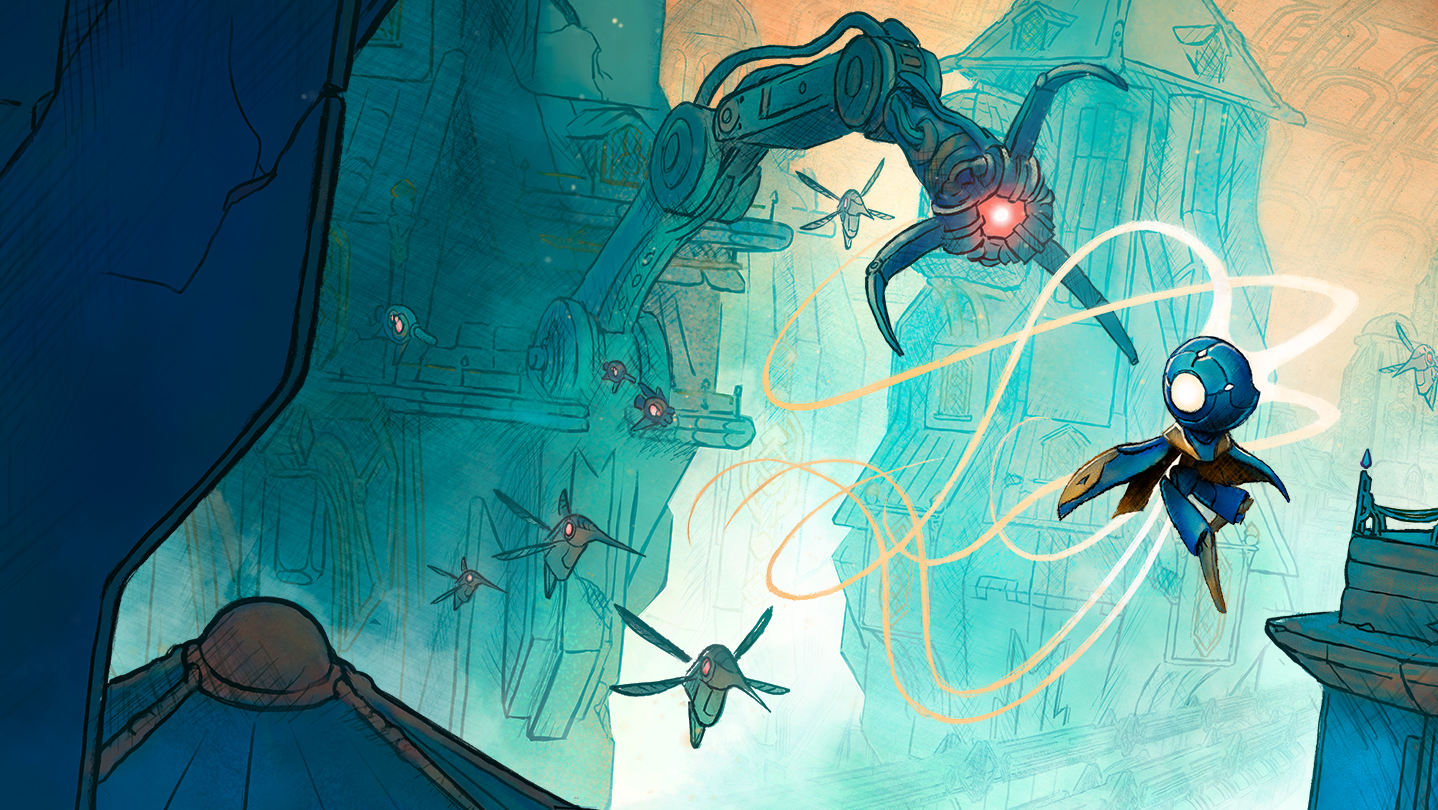
You play as a small robot named Mio, who awakens aboard a massive abandoned vessel known simply as the Vessel, with no memory of who they are or what happened. The caretaker AIs, known as the Pearls, have ceased to function, leaving the entire structure transformed into a hostile ecosystem overrun by vegetation, insects, and machines that long ago outlived their original purpose. The story never forces itself into the spotlight. Instead, you piece it together through environmental storytelling, scattered logs, and encounters with the Vessel’s remaining inhabitants. If you prefer a narrative that lays everything out for you, this approach may feel frustrating at times.
From a gameplay perspective, MIO sticks closely to the classic metroidvania formula. You gradually unlock new abilities that open previously inaccessible areas, and simply moving around as Mio is immensely satisfying. One of my favorite mechanics is the grappling hook, which lets you latch onto environmental objects as well as enemies, allowing exploration and combat to flow seamlessly into one another. The module system, which lets you tailor your build to your preferred playstyle, immediately reminded me of Hollow Knight. Much like in that game, experimenting with different builds for specific encounters or sections of the map is consistently rewarding. If you’ve played Ori, you’ll feel right at home here—although MIO leans much more heavily into challenging combat than smooth, hand-held progression.
And this needs to be said clearly—this game is challenging. Really challenging. It can send you back to the last checkpoint several times in a row before you find your rhythm or even figure out what’s going on. This is definitely not the kind of game for players looking for a relaxing stroll through a beautiful world.
The visuals are undoubtedly the game’s biggest strength. Its watercolor-inspired art style, combined with a subtle sketch-like aesthetic and a wide variety of biomes—from lush overgrown gardens to rusty industrial corridors and frozen tundras—makes the world of the Vessel truly unforgettable. I rarely find myself stopping just to admire the scenery, but I caught myself doing exactly that on more than one occasion.
The audio design is every bit as impressive. The soundtrack is just as effective at building atmosphere as the visuals, shifting from calm, melancholic melodies during exploration to intense, energetic tracks in boss encounters. The voice acting, while not every character is fully voiced, is excellent whenever it appears. Performances feel natural and convey genuine emotion without ever sounding forced.
From a technical standpoint, the PlayStation 5 version performs very well. The frame rate remains consistently smooth, and unlike versions running on less powerful hardware—where occasional performance drops have been reported—I didn’t encounter any major issues here. That said, it’s worth mentioning that some players have experienced occasional crashes, most often after difficult boss fights, which can be incredibly frustrating.
MIO’s biggest weakness is how unforgiving it can be, especially during the opening hours. Before you’ve unlocked the tools needed to deal with the challenges the game throws at you, the difficulty can feel a bit overwhelming. For metroidvania fans who enjoy overcoming tough obstacles and feeling rewarded for every shortcut they discover, this will likely be a strength rather than a flaw. However, if you’re looking for a more accessible, guided experience, you may want to think twice.
In the end, MIO: Memories in Orbit is a game that’s worth giving some time. The opening hours can be discouraging, but the deeper you venture into the Vessel, the more apparent it becomes just how much care and passion the developers poured into this world. It doesn’t reinvent the metroidvania genre, but it takes its strongest ideas and executes them with confidence and polish. If you enjoy challenging exploration, outstanding audiovisual presentation, and the satisfaction of uncovering every hidden corner of a sprawling map, this is absolutely a game worth checking out.
Final Verdict: 8/10
Personally, I had a great time with MIO. While it never truly surprised me or pushed the genre in a new direction, it left a very positive impression thanks to its atmosphere, rewarding exploration, and consistently polished design. It’s a game I’d happily recommend to anyone who appreciates a well-crafted metroidvania.