

There are some game releases that catch my eye, only for me to put them on the back burner and come back much later – usually after someone asks, „Have you seen that weird game with the train?” Denshattack! was exactly one of those games. I kept telling myself I’d get around to it eventually, but something else always came first. In the end, I finally had the chance to play it, and despite my late interest, Fireshine Games kindly provided me with a review code, for which I’m very grateful.
Before I properly sat down to play, I expected another quirky indie that I’d check out for an hour and then move on from. That wasn’t the case at all. After the very first level, I already knew I’d be sticking around, and a few stages later I found myself wondering why I hadn’t given this game a chance much sooner.
The first thing that really stood out to me was the structure of the gameplay. Denshattack! is built around short missions lasting roughly 4-6 minutes, and honestly, that’s a format I’ve been missing for a long time. More and more games demand long play sessions before they really start to shine, but here I could jump in, complete a single run, and put the controller down without feeling guilty. Or – as often happened to me – keep playing for another half hour because the next stage looked even more exciting than the last. It’s a simple idea, but it makes Denshattack! equally enjoyable whether you have just a few spare minutes or an entire evening to play.
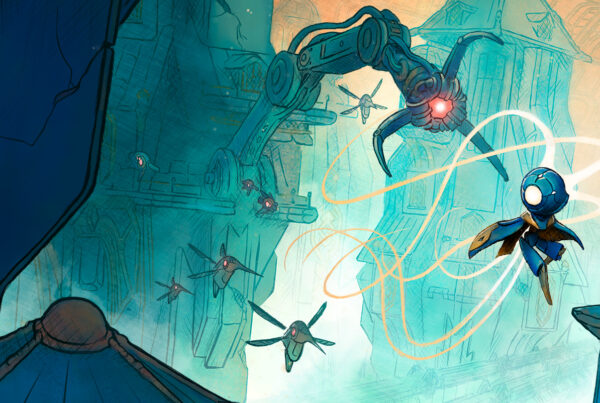
The world you explore is unmistakably Japanese, and it shows in every aspect of the game – from the level design and soundtrack to the overall story concept. The game takes place in a futuristic Japan left devastated by a climate catastrophe. The wealthy have retreated beneath massive protective domes, while everyone else is left to survive along abandoned, long-forgotten railway lines.
I won’t spoil the story because the game reveals it at a steady, well-paced rhythm, but the theme of rebellion and reclaiming the railways is present from the very beginning and remains a driving force throughout the adventure. This isn’t a story that tries to be an epic, emotionally heavy drama. Instead, it provides a light, energetic backdrop that perfectly complements the fast-paced gameplay without distracting from what matters most – riding the rails.
Riding the rails is the heart of Denshattack!. At its core, the gameplay feels like a skateboarding game transplanted onto a railway – and I mean that without a hint of irony, because it genuinely works. You control a train as if it were a skateboard, pulling off ollies, balancing on the front of the engine, riding along walls, launching yourself off the tracks, and landing back on them moments later. On paper, it sounds completely ridiculous, but in practice it’s one of the most creative gameplay ideas I’ve seen in a long time.
The controls are responsive and intuitive, so I never felt like the game was cheating me or that my failures were caused by awkward mechanics. Another feature that deserves special praise is the checkpoint system. Checkpoints are frequent and placed very fairly, which means failure is never frustrating. If you mess up a section, you’re back in the action almost instantly, making it easy to experiment and improve without feeling like you’re wasting your time.
What kept me coming back for „just one more level” was the way the game introduces new mechanics. Denshattack! has excellent pacing – it teaches you the basics first, then gradually adds wall riding, new tricks, and more advanced ways to chain everything together into satisfying combos. As a result, the gameplay keeps evolving instead of repeating itself, and there’s always something new waiting around the corner.
In many ways, it reminded me of an endless runner – except this one has meaningful progression, an actual story, and, perhaps most importantly, a real ending instead of stretching the same gameplay loop indefinitely.
It’s also worth mentioning the game’s sense of progression, because it’s something that’s easy to overlook, yet Denshattack! handles it exceptionally well. With every completed stage, I could feel both my train – and my own skills as a player – improving. Trick combinations that seemed almost impossible at first gradually became second nature, and before long my fingers were instinctively hitting the right buttons at exactly the right time. It’s incredibly satisfying when you realize you’ve stopped following the game’s suggested routes and started experimenting with your own trick combinations instead.
There’s also a subtle but rewarding layer of competition. Your score depends on both style and flow, making completed stages worth revisiting just to pull off cleaner, more impressive runs. At one point I actually felt strange not doing tricks. Whenever my train left the tracks – or the game gave me the opportunity – I found myself instinctively throwing in another stunt just because I could.
The game also does a great job of balancing intensity with moments of calm. After a demanding sequence full of tricks and precision platforming, you’re often given a chance to simply enjoy the ride and take in the scenery before the pace ramps up again. That natural rhythm of tension and release made the six hours I spent with Denshattack! fly by, and I never felt like I’d seen everything the game had to offer.
Don’t mistake those quieter moments for boredom, though. Whenever things start feeling a little too relaxed, the game is quick to surprise you with another memorable encounter – whether that’s a challenging new sequence or an over-the-top boss fight against a gigantic Japanese mech assembled from dozens of smaller trains.

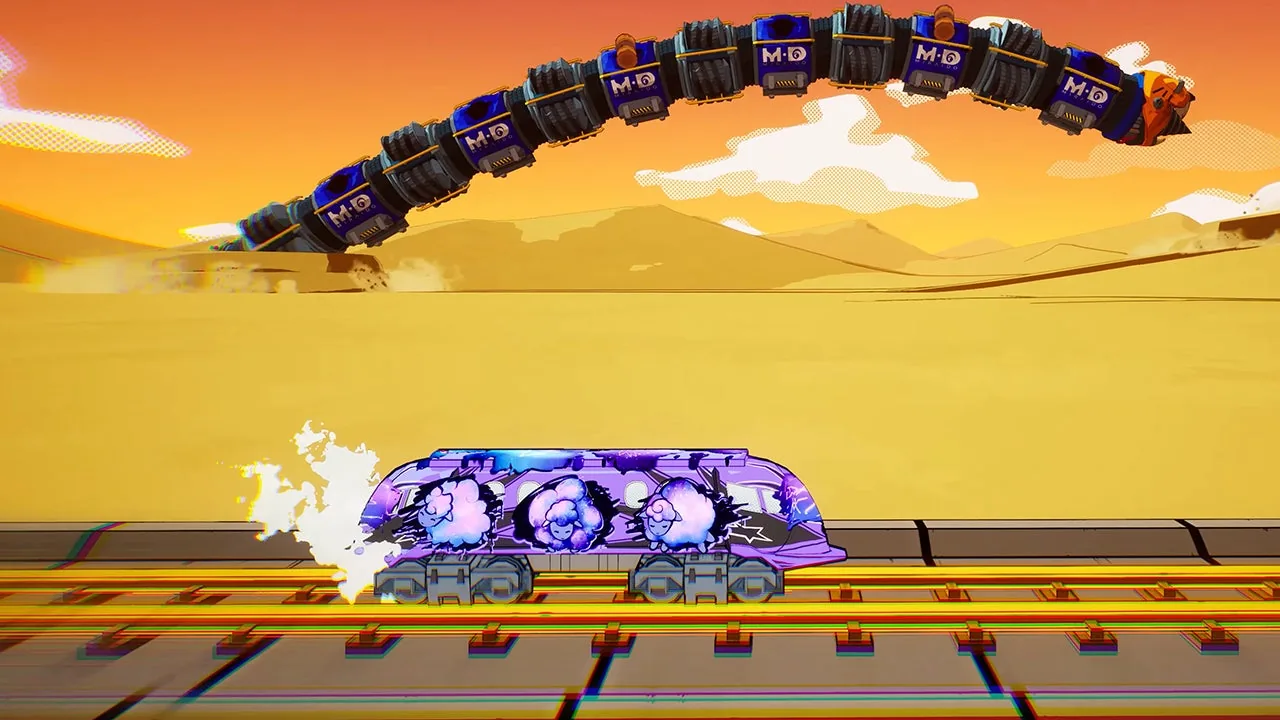
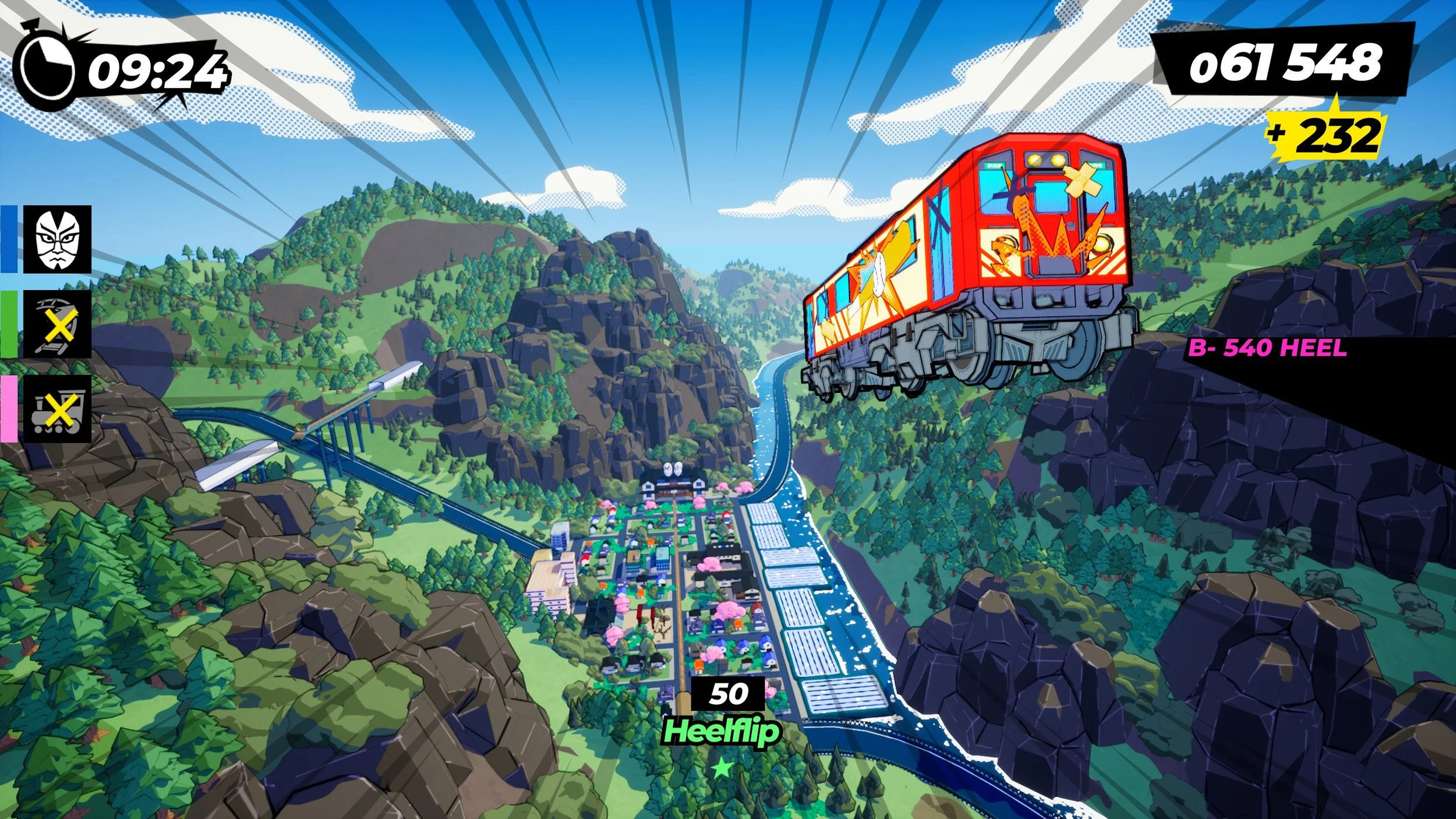
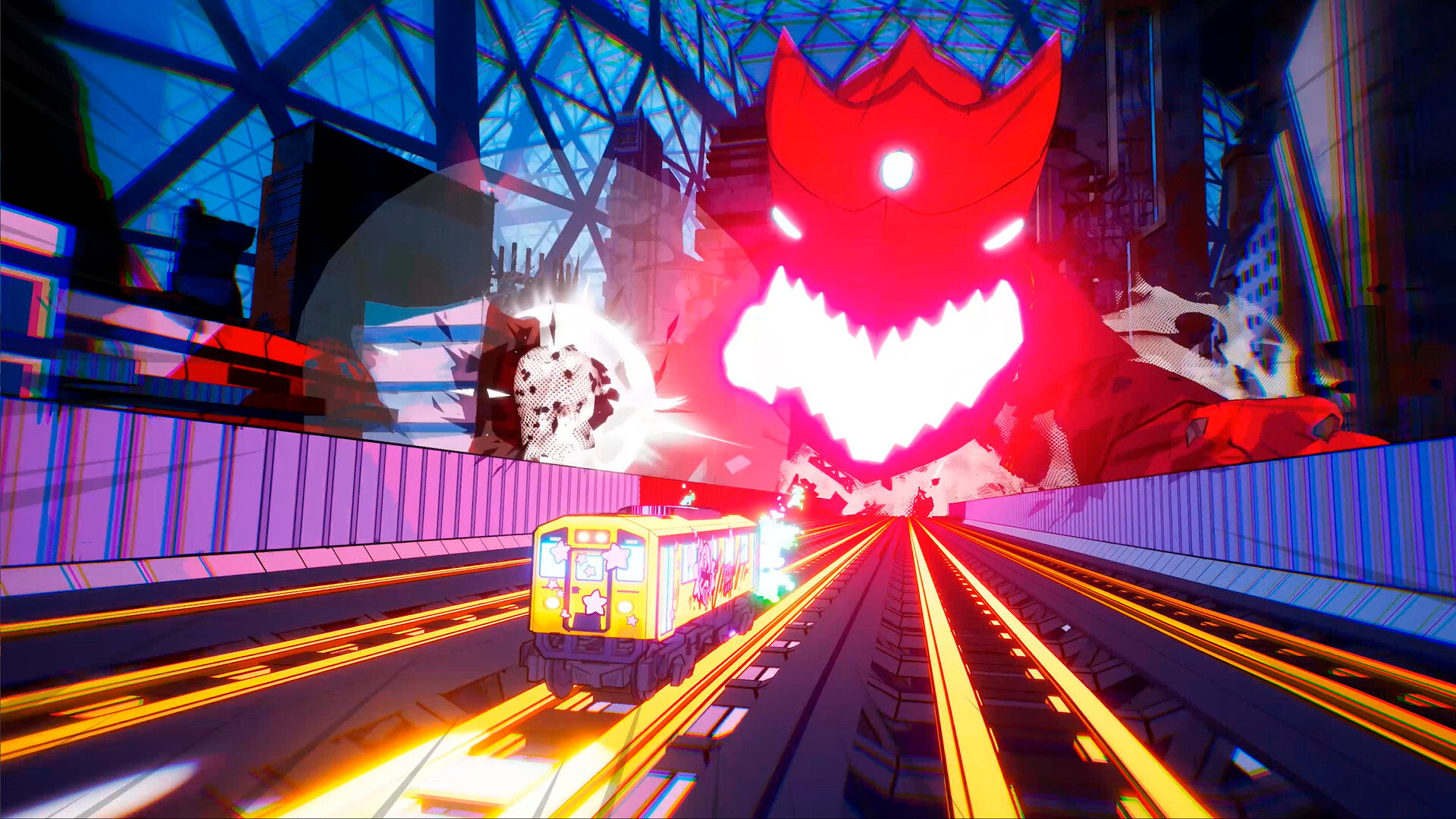 The audiovisual presentation is another major strength of Denshattack!. The visuals are simple and comic book-inspired, yet remarkably clear – even at high speeds, I never struggled to read what was happening on the tracks. The art style gave me an immediate sense of nostalgia, with Viewtiful Joe coming to mind within the first few minutes. The colors are vibrant, the animations are satisfying, and the game has a distinct visual identity that easily stands out from most of what I’ve played recently.
Let’s call it what it is – cel shading, one of the greatest visual techniques to come out of the PlayStation 2 era, and one that still looks fantastic today. Denshattack! is yet another reminder of why that style has aged so gracefully.
As for the technical side on PlayStation 5, I really have no complaints. Performance is consistently smooth, with no frame drops or stuttering that could interfere with the game’s fast-paced, precision-focused gameplay. Loading times are short, transitions between levels are seamless, and nothing ever breaks the flow. I also didn’t encounter any bugs during my playthrough – the game simply works, and it works very well.
Denshattack!’s biggest strengths are its originality, fast-paced gameplay, constant introduction of new mechanics, and its bite-sized mission structure, which is perfect for shorter gaming sessions. The game keeps throwing fresh ideas at the player, so even after several hours I never felt like I was repeating the same thing over and over. Add the distinctive audiovisual presentation and rock-solid performance, and the whole experience becomes even more enjoyable.
Finding traditional flaws isn’t easy. If I had to criticize something, it would be the core concept itself. This is an unapologetically weird game, and I have no doubt it won’t appeal to everyone. The idea of combining trains with skateboard-style tricks sounds so absurd that some players may dismiss it before even giving it a chance. That would be a shame, because beneath that bizarre premise lies a genuinely well-designed and carefully crafted game.
That’s exactly why I can’t recommend Denshattack! to absolutely everyone. But if you’re looking for something truly original, enjoy short yet intense gaming sessions, and don’t mind a healthy dose of creative madness, this is absolutely a game worth checking out. It’s especially easy to recommend to fans of Japanese aesthetics and anyone who fondly remembers classics like Viewtiful Joe.
My final score is 8/10. I really appreciate the game’s originality, its pacing, the way it constantly introduces new mechanics, and how surprisingly cohesive the entire experience feels despite sounding completely ridiculous on paper. I never expected a train performing skateboard tricks and gravity-defying stunts to hook me this much, but that’s exactly what happened. Denshattack! is one of those games that’s far better experienced firsthand than judged from a trailer or a handful of screenshots.