
Let’s get one thing out of the way – I’ve been a fan of the A Plague Tale series from the very beginning. There was just something about those games that clicked with me. Maybe it was the more intimate scale, maybe the relationships between the characters, or maybe simply the fact that Asobo always had its own vision and stuck to it.
The series was never perfect, but it always felt like my kind of game. I’ve been following its story from the very beginning, even putting up with the occasionally incredibly annoying Hugo, so naturally, I’d been waiting for the next chapter with a lot of anticipation. And, as luck would have it, I got incredibly lucky – Focus Entertainment, to whom I’m very grateful, provided me with a PlayStation 5 code almost three weeks before the planned release.
Let’s clear one thing up right away – this review was written based on a version of the game without the day-one patch. I even exchanged a few messages with Focus Entertainment about one or two issues, and apparently some of my feedback might actually make its way into a future patch! But even now, without spoilers, without beating around the bush, and without that first patch – oh, this is really good! Although… not everyone will feel the same way. Because Resonance: A Plague Tale Legacy does several things extremely well, but in some respects, it’s also a very different game from what you might have expected. And for some fans of the previous entries, that could be a rather painful surprise. In the review below, I’ll try to explain why!
Before buying Resonance: A Plague Tale Legacy, though, we need to rip off one particularly painful band-aid. The sooner, the better – there are no rats in this game. Not a single one. And, to be honest, the game doesn’t really have one obvious, standout gimmick either – something you could immediately show in a trailer and say: “Look, this is the new A Plague Tale!” It’s still an adventure game that alternates between combat and environmental puzzles, with stealth thrown into the mix somewhere along the way, although in a much more limited form this time around. But let’s take this one step at a time!
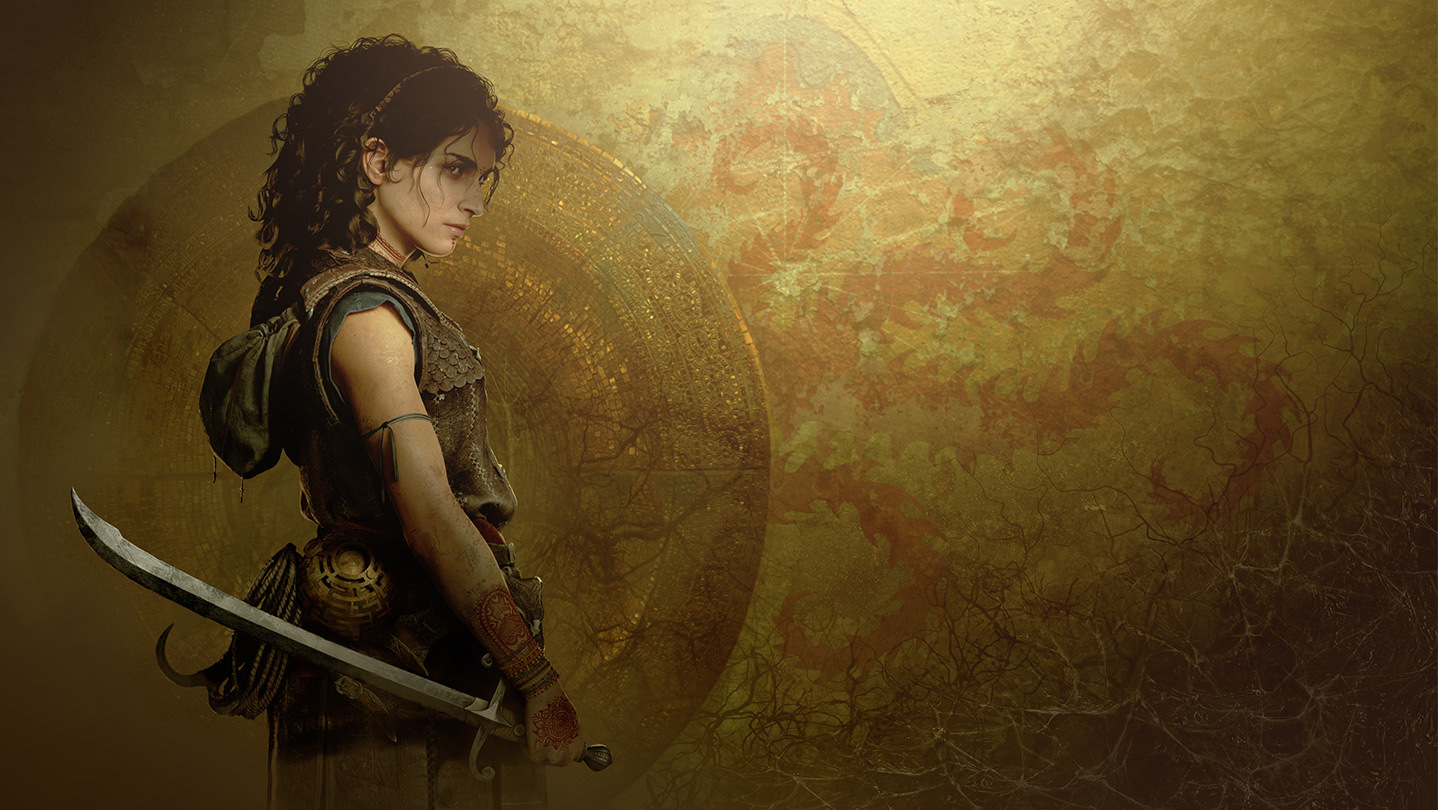
This time around, the story follows a young woman named Sophia, who has – to put it mildly – had a pretty rough life. Which, to be fair, isn’t particularly difficult when you live on an island full of pirate Vikings who make their living through raiding, fighting, drinking, and violence in pretty much every form imaginable. Sophia does, however, possess another trait that is incredibly valuable to her tribe – she experiences visions of the past that may help them find the mysterious island of the Minotaur. And apparently, there’s a huge treasure hidden there, so there’s definitely something worth fighting for. From time to time, Sophia relives other people’s memories and carefully records everything in her journal. And that journal isn’t just important to the story – it’s useful for us as players too, because it often helps when solving some genuinely well-designed puzzles.
The gameplay is noticeably different from what we know from the previous A Plague Tale games. Mainly because Sophia isn’t a frightened little girl anymore, but an adult woman who, for most of the game, knows her way around a sword pretty damn well. That significantly changes the way we approach things, which is visible in the progression system and in the general lack of sneaking up behind enemies. There simply isn’t a quick takedown button here that lets you silently eliminate one opponent after another.
What’s interesting is that stealth sections do make an appearance, but they’re more about running away from danger than actually fighting it. The progression system itself is fairly simple and focuses on improving Sophia’s core moves – you can, for example, upgrade her dodges or add new elements to her kick, such as the ability to stun an enemy.
You upgrade these abilities using currency that you literally pick up off the ground. Does it make a whole lot of sense? Not really, but it’s there. So if you come across a fork in the road and one path clearly leads the story forward, feel free to take the other one first – chances are you’ll find some of those upgrade fragments waiting for you at the end.
Combat itself may largely come down to mashing the Square button, but the truth is that enemies rarely let you simply stand there and swing your sword around. This time, strategy matters more – as does the way you approach each fight and deal with individual opponents. Let me put it bluntly – it’s not easy. And a larger group of enemies means much bigger trouble.
There are also some light RPG elements that let us slightly customize our heroine. Scattered throughout the world, you’ll find chests containing additional swords, each with its own main trait. One might be better at breaking shields, while another can add an extra attack to your combo, and so on. Every now and then, you’ll also come across pieces of equipment – or, more specifically, jewelry. A ring, an armband, a pendant. These also provide various bonuses, such as a slightly higher chance to dodge or the ability to survive a critical hit.
To be honest, while playing, I found it difficult to tell exactly how much all of these extras actually affected the gameplay. What I do appreciate, though, is that you don’t have to sit in a menu later and decide which one to give up. Whatever you find, you simply equip, and that’s it – everything works automatically. The limitation isn’t the number of available slots, but simply how many items you manage to find while exploring.
You can, of course, freely adjust the difficulty settings, with plenty of options that make things either easier or harder. What matters most, though, is that on higher difficulty levels, your health bar becomes more limited, and you can’t simply refill it whenever you want. There are ways to recover some health, such as perfectly parrying attacks or defeating an enemy, but I guarantee you – you’re going to die more than once.
Tying the difficulty level to the amount of health available to us… well, I’m not particularly fond of that solution, but it is what it is. If you enjoy combat and experimenting with different approaches, you’ll probably want to go for a bigger challenge. But if you’re here mainly for the story, the lowest difficulty level gives you automatic parries and dodges. So, as always, it’s really up to you.
On top of that, there’s a whole range of enemies, which does a pretty good job of forcing you to change your tactics. One guy is firing arrows from somewhere safely out of your reach, a pikeman shows up a moment later, and somewhere nearby there’s a bloke with a massive shield who you can’t simply overwhelm by spamming attacks. There are also two types of bosses – the bigger ones, with health bars taking up half the screen and more cinematic fights complete with cutscenes, and smaller ones that can still make your life miserable and come with several health bars of their own.
Movement, on the other hand, is very much in line with what we already know from the previous games. There’s some climbing, some jumping, and now also a rope with a hook that lets us reach previously inaccessible vertical areas. Although that’s not its only use, because more than once you’ll have to save yourself from a painful fall into the abyss with your trusty grappling hook or simply swing your way to the other side.
This is an adventure game, after all, and what would an adventure game be without puzzles? There are quite a few of them here, and I was honestly surprised by how intuitive they are and how much I enjoyed them. Generally speaking, there are plenty of “mirrors and beams of light” involved, but thankfully, they’re presented in a way that is both accessible and rarely frustrating. The game also does something quite clever here, because at times, the puzzles may seem repetitive. You finish one room, walk into another and… here we go again. The same thing.
Except it’s not.
The developers constantly add something new, rearrange existing elements, or completely change the way certain mechanics work. So even though I caught myself thinking, “Oh no, here we go again,” a few times, that “same thing” never actually came back in quite the same form. Every time, there was some new element that forced me to approach the puzzle differently and managed to surprise me all over again. A large part of that comes down to a mysterious artifact that eventually finds its way into our hands – but of course, that’s not the only reason.
It’s also worth saying that not everyone is going to love the structure of this new A Plague Tale. There’s a fairly rigid formula at work here: cutscene, fight, puzzle. And the game rarely strays from it. Once you’re done moving mirrors around, you can be pretty sure that five more guys are about to come charging at you and try to turn your ass into ancient history.
What’s important, though, is that you’ll rarely find yourself genuinely stuck. The options menu includes several settings related to both the puzzles and how often your companions offer hints, as well as the combat itself. You can, for example, enable automatic blocking and dodging, so the developers really do give you plenty of freedom to adjust the level of challenge to your own abilities.
The story itself is quite interesting, and it’s hard to deny the game its charm. It’s simply enjoyable to follow, even if it’s not the kind of story that completely turns you inside out emotionally from the very first minutes. The characters do a lot of the heavy lifting here. They’re well written and, more importantly, they actually behave like people.
Sophia may be a formidable warrior who leaves a literal trail of bodies behind her as she ventures deeper into the island, but she can still feel genuine fear. And that’s portrayed incredibly well, both through the motion capture and the voice acting. This isn’t just true of the main character, either.
The supporting characters we travel with aren’t simply there to stand next to us and occasionally say something important for the plot. They talk to each other, comment on what’s happening around them, and have their own stories and problems that can genuinely pull you in. They also take part in solving puzzles – sometimes staying behind to operate a switch, other times heading into places we simply can’t reach ourselves.
You can really feel that the developers wanted us to spend time with actual people rather than another batch of NPCs to tick off on the way to the next mission. And in that respect, they definitely succeeded.
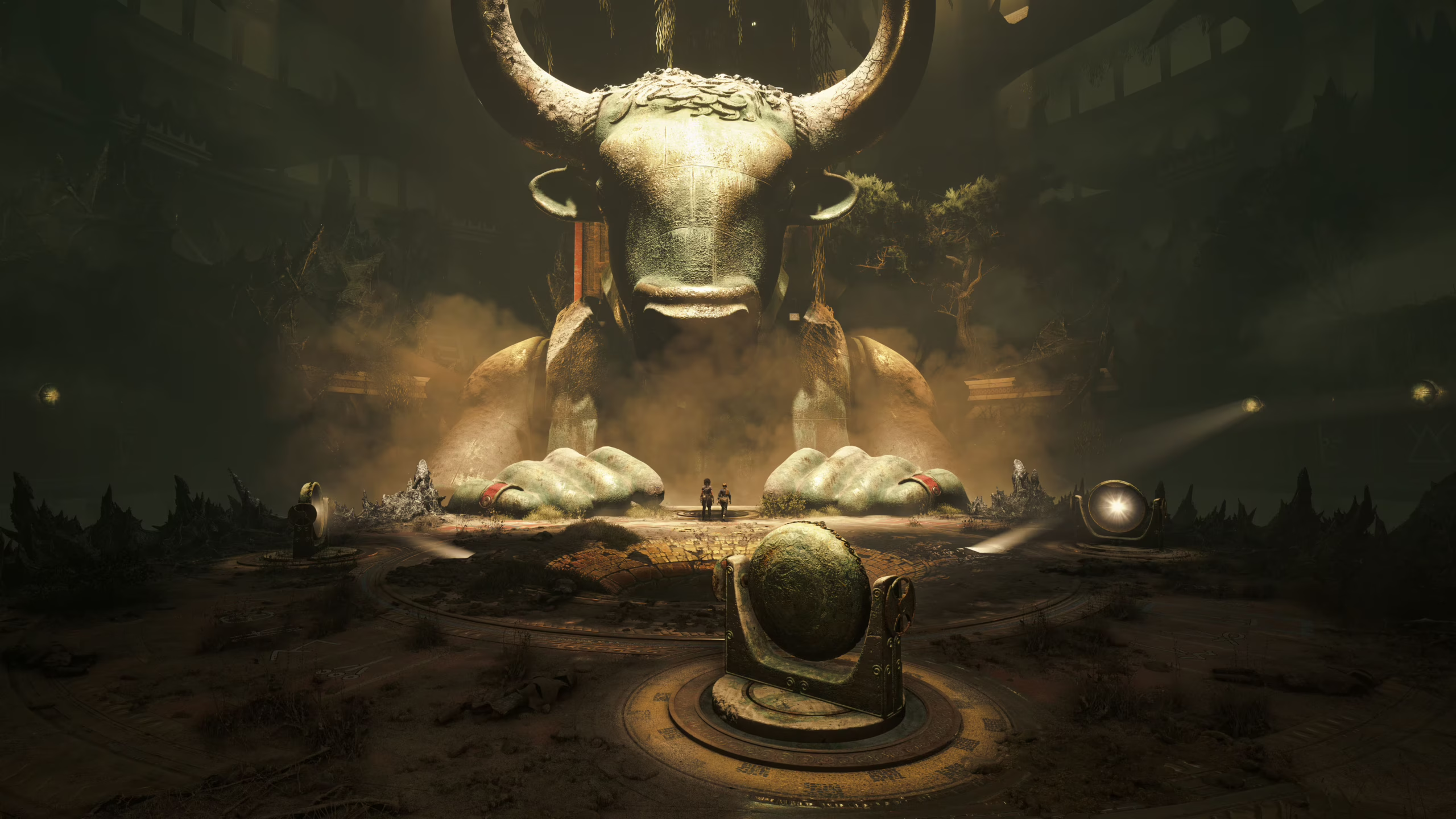
 The story itself and the characters’ motivations feel logical, and some of its elements are woven into the gameplay in a genuinely clever way. Sophia has experienced visions of places she has never seen before since she was a child. All of them seem to lead her toward the mythical and mysterious island of the Minotaur, which is exactly where the main story takes us – in search of a treasure that has kept her entire tribe busy for years. So far, with very little success, obviously.
These visions work in two different ways. On the one hand, there are moments when we get to control Theseus, a warrior from centuries ago whose story unfolds during selected parts of the game. On the other, Sophia’s lifetime of strange visions turns out to be pretty useful from a practical perspective as well. Her journal – or rather, her diary – is filled with mysterious symbols, drawings and illustrations that we later use while solving puzzles.
Don’t know what to do next? There’s probably a page somewhere in the notebook marked with the symbol of that particular puzzle, along with notes from the past. Not sure where to go? One of the illustrations might show a mountain range and a hidden passage. And this is probably what I liked most about the whole idea. This isn’t just a standard hint system thrown into the game for people who can’t be bothered to figure things out themselves. It’s a genuinely clever mechanic woven directly into the story – one that makes sense, grows naturally out of Sophia’s past, and actually helps us while playing. Thanks to that, even when the game gives us the answer, it never feels like someone suddenly jumped out from behind the screen and said: “Hey, go over there, or you’ll still be sitting here tomorrow.”
Even though I had the chance to play Resonance: A Plague Tale Legacy – and finish it! – almost three weeks before release, the game performed really well for the vast majority of my playthrough. The animations are razor-sharp, and the whole experience remained smooth and stable most of the time. And that matters, because the visuals here are among the best I’ve seen in this kind of game.
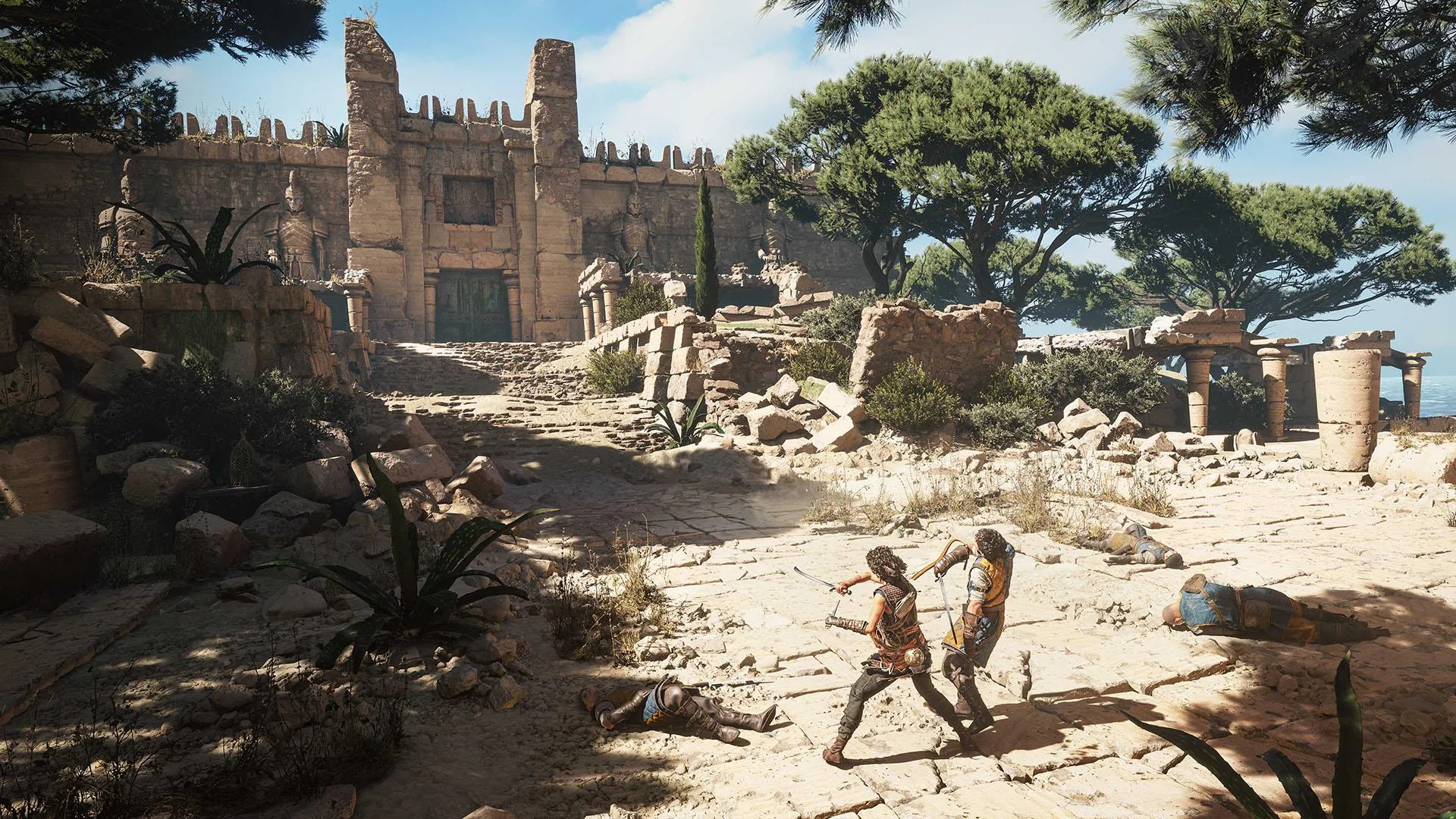
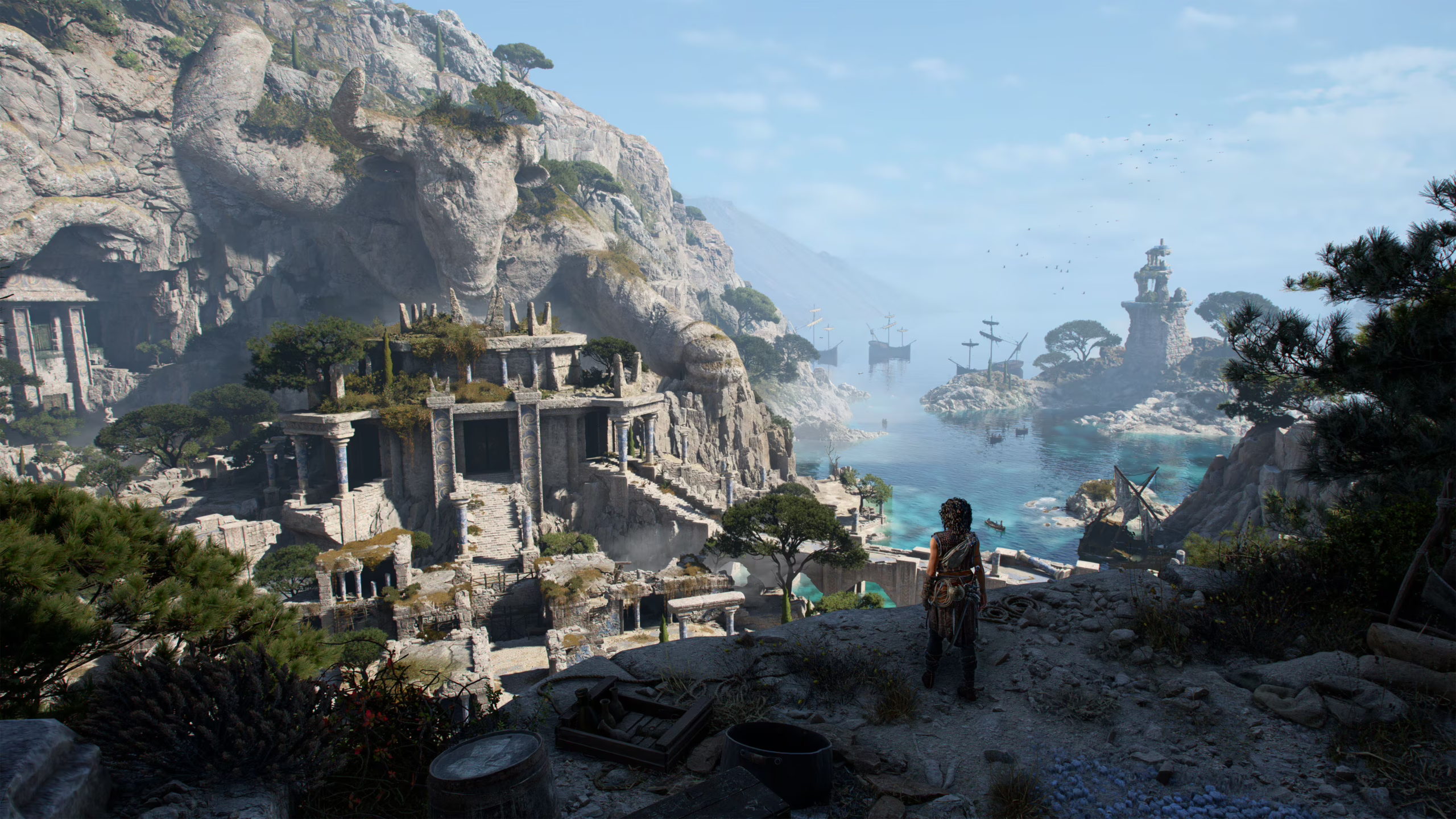
The French have already got us used to the fact that they have an enormous amount of talent, imagination and experience, but this time they really seem to have outdone themselves. Time and time again, you’ll come across open, beautifully designed areas filled with gigantic statues watching over you from somewhere in the distance. The sense of scale – and just how small you can feel standing in the middle of all of it – can be genuinely impressive.
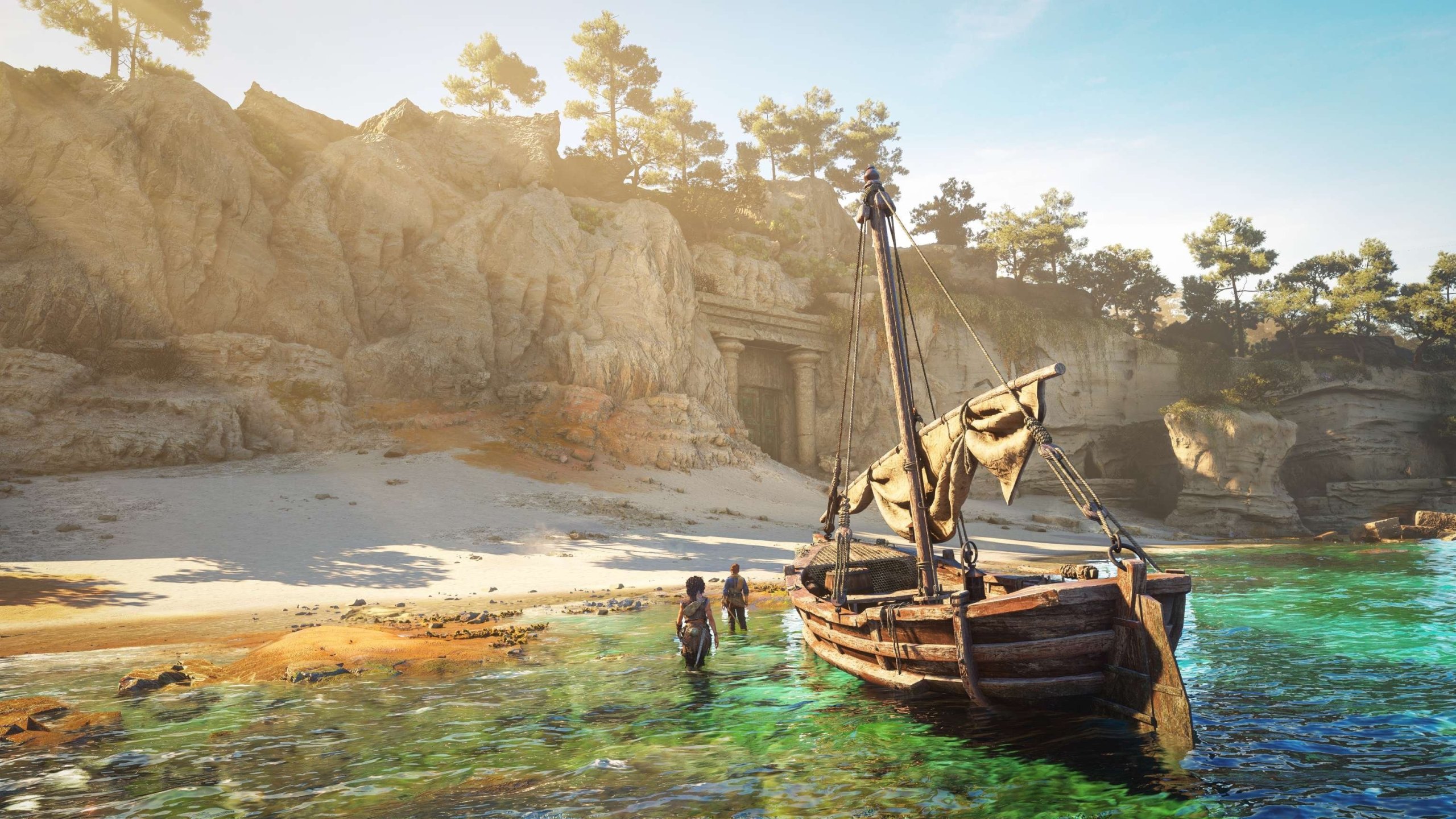
The developers clearly put a huge amount of work into creating the island itself. It serves as the backdrop for everything we do, but at times, it almost feels like one of the main characters of the story. There’s rarely a sense of déjà vu here. You’re constantly arriving somewhere new, seeing something different and wanting to find out what lies further ahead.
Sure, you spend most of your time running through the island and, more specifically, its enormous ruins, so the overall palette can sometimes feel rather grey and harsh. But more than once, I stopped simply to look at a beautiful, peaceful sunrise or sunset.
By the way, light plays a really important role here. I’ve already mentioned the many mirror-based puzzles – even if they are genuinely well designed – but the deeper we venture into the island, the more important light becomes to both the story and the combat itself. Suffice it to say that some enemies simply cannot be defeated without it. Now imagine fighting a horde of enemies while a gigantic mechanism repeatedly plunges everything around you into darkness. You’re then running from left to right, desperately trying to find the last remaining patch of light that will allow you to deal any damage at all. Because only while standing in sunlight can we actually drain their health. It’s a really cool idea. And thankfully, the developers didn’t decide to torture us with it for half the game – everything here feels nicely balanced.
Sound is another major strength. It starts with the main menu itself, where wonderful choral performances immediately brought The Witcher 3 to mind, and continues throughout the entire game. The speaker in the PlayStation 5 controller can suddenly scream at you when you least expect it, while the caves and underground areas genuinely feel alive. You can hear water dripping – and, by the way, there are fish swimming in most of the bodies of water on the surface – enemies lurking somewhere in the distance, echoes, and a whole range of spatial effects that do a fantastic job of building the atmosphere.
Sophia herself is wonderfully voiced, which adds another layer of authenticity to her character and creates those little moments that can genuinely get under your skin. During escape sequences or more chaotic moments, she screams in fear, struggles to catch her breath, and sometimes even calls on her god for help. And these aren’t just a handful of pre-recorded lines that you hear once every few hours. Her reactions are frequent and natural enough that they genuinely stood out to me.
Sophia is one of the more impressively voiced characters I’ve come across in games recently, because throughout the entire experience, she behaves like an actual human being who has somehow found herself right in the middle of all this madness.
The game does not feature Polish voice acting, but we did get a Polish subtitle-only version. And honestly, it’s difficult to find much to complain about when it comes to the translation itself. Everything feels like it fits, nothing sounds out of place, and the Polish localization is simply atmospheric and professional. I have absolutely no complaints about the menus, the various journals and texts you find throughout the game, or the dialogue itself.
So, what about the negatives? Well, there are a few.
My version managed to freeze my console a couple of times or even send me falling into the “abyss,” but to be fair, that was most likely due to the lack of a day-one patch. I was playing almost three weeks before release, so it would be difficult to make a huge issue out of something that may already be fixed by the time you read this. I also had a few problems with the stealth sections. I even spoke to the developers about them, because some of the escape sequences felt like they were timed literally down to the second, which caused me quite a few serious problems. In the end, though, my controller may have been more to blame, as it was reacting strangely to the sprint button. So once again, I’m not going to force a problem where there may not actually have been one.
At the same time, even though I finished the game in around 13 hours, I sometimes felt like I had been playing for about three hours too long. Especially during the final stages, where some sections started to feel a little too similar to one another. The strange thing is that after finishing the game, I still couldn’t point to a specific section that felt completely unnecessary or something I would happily cut.
That’s the paradox.
And then there is the gimmick I mentioned earlier – the thing that helped define the previous games in the series. There is something here as well, of course, but I’m not going to talk about it because we would quickly wander into spoiler territory.
Let’s just say this – it’s not a mechanic or an element interesting and distinctive enough to immediately become the defining feature of the entire game.
And that hurts a little.
Because Resonance: A Plague Tale Legacy is one of the most interesting games of this fall. It’s a full, engaging, and technically impressive production that, even in the version I played almost three weeks before release, performed really well for the vast majority of the time. It’s a game that pulls you in from the very beginning thanks to its story, narrative, and believable characters. A beautiful game that makes great use of the world of A Plague Tale while also being a genuinely solid action-adventure.
And most importantly – it’s a game I had been waiting for.
Did it meet all of my expectations? No.
Is it perfect? Also no.
But finishing it gave me a hell of a lot of enjoyment.
And honestly, at this point, I don’t think I needed anything more from it.
My score? 9/10. Because while I was hoping for a continuation of the adventures of a character I already knew and instead got a game merely set in the world of A Plague Tale, I ultimately finished it satisfied, fulfilled, and having had a genuinely great time.
And that’s what I expect from games above all else – to have a great time.